 Astha SangrahASTHA SANGRAHhttps://asthasangrah.com
Ekadashi Vrat
Ekadashi falls on the eleventh lunar day of both the Shukla and Krishna Paksha of every Hindu month, that is, twenty-four times a year, and is regarded as the most sacred tithi for the worship and fasting dedicated to Lord Vishnu.
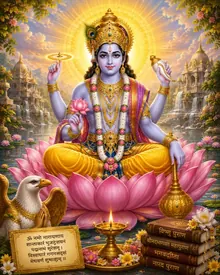
Ekadashi occurs twice in every Hindu month, making twenty-four Ekadashis in a year. The date shown above is of the nearest upcoming Ekadashi (Parsva Ekadashi), see the list below for the names and significance of all twenty-four through the year, and check a local panchang for the exact date.
Significance of Ekadashi Vrat
Ekadashi is counted among the most sacred tithis of the Hindu panchang, regarded as especially dedicated to the worship and fasting devoted to Lord Vishnu. It is believed that observing a fast on this day purifies the mind and body, destroying accumulated sins and paving the way toward liberation.
Every Ekadashi has its own name, its own Puranic legend, and its own specific significance, some are observed for the wish of children, some for the liberation of ancestors, and some for the destruction of every sin. This variety is described in detail in scriptures like the Skanda Purana and Padma Purana.
Nirjala Ekadashi of the Jyeshtha month is regarded as equal in merit to all twenty-four Ekadashis combined, while Devutthana Ekadashi of the Kartik month holds special significance as the day Lord Vishnu awakens from his Chaturmas slumber, after which auspicious ceremonies resume.
The Year's Twenty-Four Ekadashis
How Ekadashi Vrat Is Celebrated
On Ekadashi, devotees bathe in the morning and take the vow of the fast, avoiding grains, especially rice, through the day. Some devotees observe a fruit-based fast, while others, according to their capacity, keep a waterless fast as well.
An image or idol of Lord Vishnu is worshipped, and the Vishnu Sahasranama, Vishnu Chalisa, or the legend specific to that Ekadashi is recited. There is also a tradition of bhajan-kirtan and staying awake through the night.
The fast is broken the next day, on Dwadashi tithi, within the scripturally prescribed Parana muhurat, neither after Dwadashi tithi has ended, nor during Hari Vasara (the first portion after Ekadashi ends), since either is considered improper for the vow's merit.
Ekadashi Vrat Puja Vidhi
On Ekadashi, bathe in the morning, take the vow, and avoid grains through the day. Worship Lord Vishnu and recite the Vishnu Sahasranama or the legend of that specific Ekadashi. The next day, on Dwadashi, break the fast only within the scripturally prescribed Parana muhurat.
About Ekadashi Vrat
Ekadashi Vrat is the fast observed on the eleventh tithi of both the Shukla and Krishna Paksha of every Hindu month, dedicated to the worship of Lord Vishnu. This page covers the general significance of Ekadashi Vrat, the fasting and Parana vidhi, and a list of all twenty-four Ekadashis of the year with their names and significance.
For the Ekadashis whose complete legend is available on this site, clicking their name in the list opens the full story. The information on this page is presented with easy-to-read sizing and print support.
Frequently Asked Questions
How many Ekadashis are there in a year?
A normal year has twenty-four Ekadashis in total, one each in the Shukla and Krishna Paksha of every Hindu month. In a year with an intercalary month (Adhik Maas), this count can rise to as many as 26.
Why are grains avoided during Ekadashi Vrat?
It is believed that on Ekadashi tithi, grains, especially rice, harbor negative influences, which is why the tradition is to avoid grains and observe a fruit-based or waterless fast on this day instead.
When is the Ekadashi fast broken?
The fast is broken the next day, on Dwadashi tithi, within the scripturally prescribed Parana muhurat, and breaking it during Hari Vasara is not considered proper.
Which Ekadashi is considered the most significant?
Nirjala Ekadashi of the Jyeshtha month is regarded as equal in merit to all 24 Ekadashis, while Devutthana Ekadashi of the Kartik month holds special significance as it marks Lord Vishnu's awakening and Chaturmas's end.