 Astha SangrahASTHA SANGRAHhttps://asthasangrah.com
Shardiya Navratri
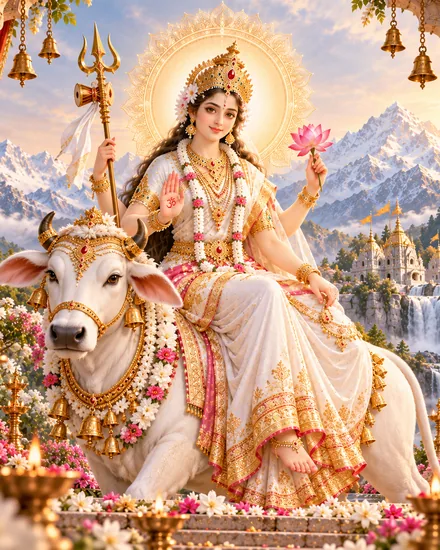
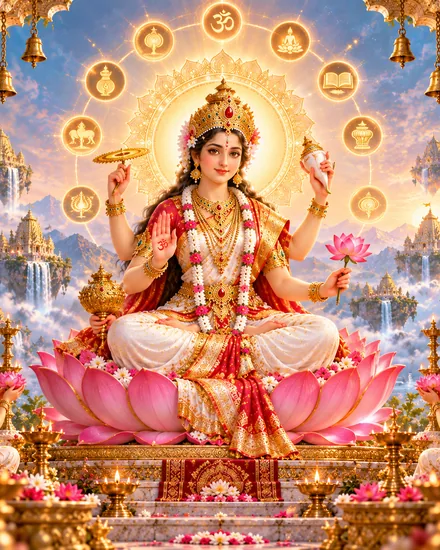
Shardiya Navratri is the nine-day, nine-night festival dedicated to the worship of Maa Durga's nine forms, observed from Ashwin Shukla Pratipada to Navami.
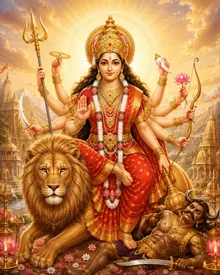
Ghatasthapana's auspicious muhurat is fixed only on the morning of Pratipada tithi, timed to the Abhijit Muhurat, so confirm the exact time with a local panchang. The same nine days are observed as Durga Puja in eastern India, and with Garba-Dandiya nights in Gujarat.
Significance of Shardiya Navratri
Shardiya Navratri is observed in the Ashwin month at the start of autumn, which is why it is called 'Shardiya' (autumnal). It is believed that over these nine days, Maa Durga slayed the demon Mahishasura and freed the world from his tyranny. The festival symbolizes the victory of truth over falsehood and light over darkness, and is the most widely celebrated of the year's four Navratris.
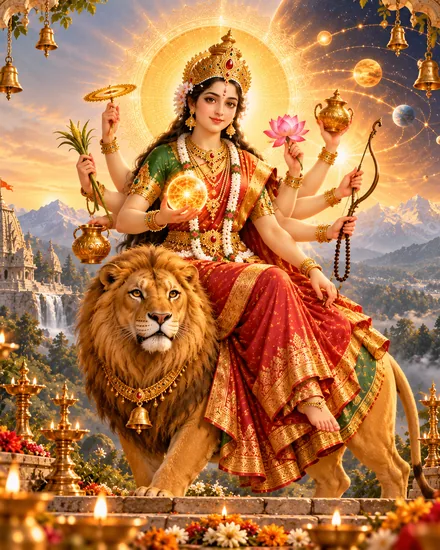
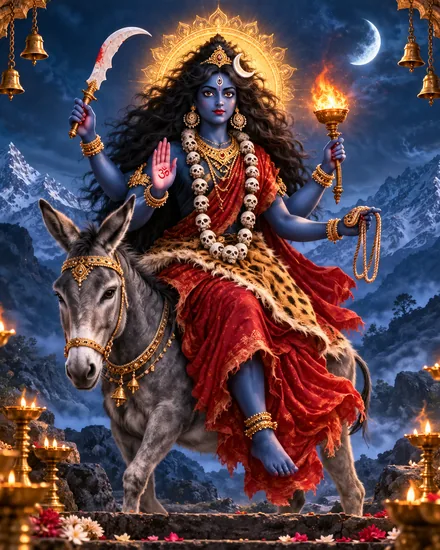
Across the nine days, Maa Durga's nine forms, Shailputri, Brahmacharini, Chandraghanta, Kushmanda, Skandamata, Katyayani, Kalaratri, Mahagauri, and Siddhidatri, are worshipped in sequence. Each form represents a distinct power and virtue, and devotees meditate on and worship that specific form each day.
Dussehra, which falls right after Shardiya Navratri ends, also commemorates Lord Rama's victory over Ravana, which is why Ramlila performances are staged in many places across these nine days. In eastern India, the same period is celebrated as Durga Puja in grand pandals, concluding with the immersion of the goddess's idol.
Navratri's Nine Forms
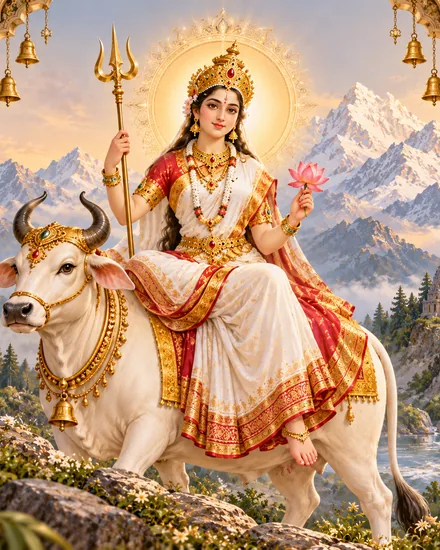
Maa Shailputri
Day 1Mantra: Om Aim Hreem Kleem Shailaputryai Namah
Bhog: Pure cow's ghee · Health, stability, and longevity
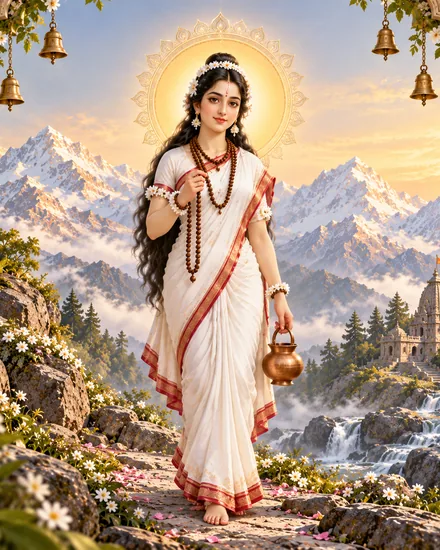
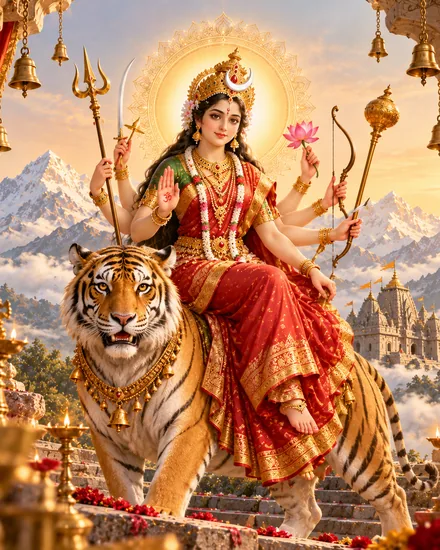
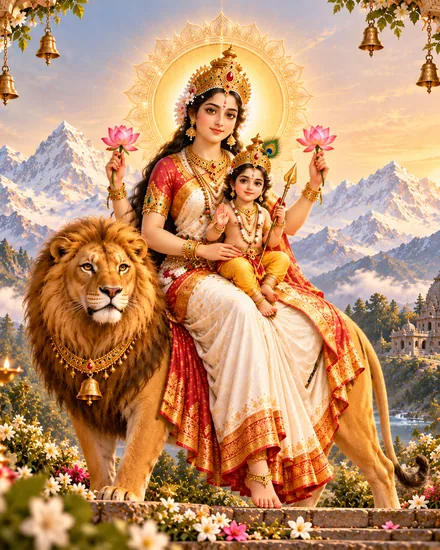
Maa Chandraghanta
Day 3Mantra: Om Aim Hreem Kleem Chandraghantayai Namah
Bhog: Milk and milk-based dishes · Courage, valour, and freedom from fear
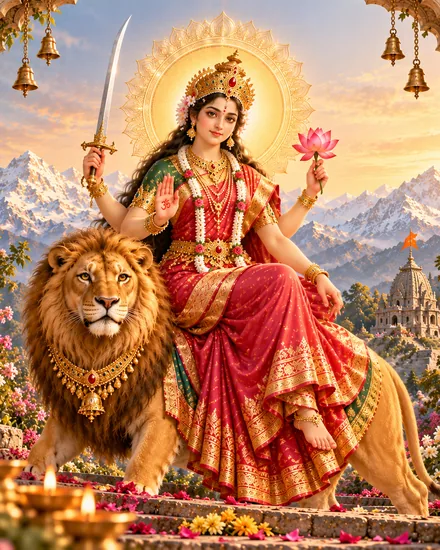
Maa Katyayani
Day 6Mantra: Om Devi Katyayanyai Namah
Bhog: Honey · Removal of obstacles in marriage
How Shardiya Navratri Is Celebrated
On the first day, Ghatasthapana (kalash sthapana) is performed, barley seeds are sown in an earthen pot, and a water-filled kalash topped with mango leaves and a coconut is set up to invoke Maa Durga. A continuous lamp (akhand jyoti) is lit at home or in a temple and kept burning through all nine days.
Each day, the corresponding form of the goddess is worshipped, along with a recitation of Durga Saptashati and the aarti. Many devotees observe a fast for all nine days, while others fast only on the first and last day. On Ashtami or Navami, Kanya Pujan is performed, young girls are honoured as forms of the goddess and served a meal.
In Gujarat, these nights are marked with Garba and Dandiya Raas. In West Bengal, grand pandals are decorated for Durga Puja. In many cities of North India, Ramlila is staged through the nine days, culminating in the burning of Ravana's effigy on the ninth or tenth day.
Shardiya Navratri Puja Vidhi
On Pratipada tithi, bathe in the morning, cleanse the puja space, and sow barley seeds in an earthen pot. Fill a kalash with water, place mango leaves and a coconut on it, invoke Maa Durga, and light the akhand jyoti. Each day, meditate on that day's form, recite Durga Saptashati or the Durga Chalisa, and perform the evening aarti. Conclude with Kanya Pujan and a havan on Ashtami or Navami.
Ghatasthapana Muhurat 2026
This year the morning window falls in Chitra nakshatra and Vaidhriti yoga, which are considered unfavourable for Ghatasthapana though not prohibited, so many families choose the Abhijit Muhurat. Times are for New Delhi; check your own city's panchang.
Rules for Ghatasthapana
- The most auspicious time is the first one-third of the day while Pratipada tithi prevails.
- If that window isn't available, Ghatasthapana can be done during Abhijit Muhurat.
- Ghatasthapana is prohibited during Amavasya and at night; complete it before midday, while Pratipada prevails.
Items for Kalash Sthapana
- A wide clay pot for sowing grains
- Clean soil
- Sapta Dhanya (seven kinds of grain) or barley
- A small clay or brass kalash
- Ganga jal or other pure water
- Sacred thread (moli / kalava)
- Scent (itra)
- Supari (betel nut)
- Coins
- Five mango or ashoka leaves
- A lid for the kalash
- Akshat (unbroken raw rice)
- An unpeeled coconut
- Red cloth
- Flowers and a garland (marigold preferred)
- Durva grass
Kalash Sthapana Vidhi
Bathe in the morning, wear clean clothes and purify the puja space, then follow these steps in order within the muhurat.
- 1
Prepare the grain pot
Spread a first layer of soil in the wide clay pot and scatter grain seeds over it. In the second layer, spread the seeds near the rim of the pot, then add a final layer of soil and sprinkle a little water if needed.
- 2
Tie the moli and fill the kalash
Tie the sacred thread around the neck of the kalash and fill it with Ganga jal or pure water.
- 3
Add the offerings
Drop supari, scent, durva grass, akshat and coins into the water.
- 4
Place the leaves and the lid
Arrange five mango or ashoka leaves around the mouth of the kalash, then cover it with the lid.
- 5
Set the coconut
Wrap the unpeeled coconut in red cloth, fasten it with moli, and place it on top of the kalash.
- 6
Place the kalash on the grain pot
Set the prepared kalash in the centre of the clay pot where the grains are sown.
- 7
Invocation and Panchopachara Puja
Invoke Maa Durga and pray that she reside in the kalash for the nine days. Then perform Panchopachara Puja with five offerings: lamp, dhoop, flowers, scent and naivedya (fruits and sweets).
- 8
Akhand Jyoti
As per tradition, light the akhand jyoti, which is kept burning through all the days of Navratri.
The Nine Days and the Conclusion
- 1
Every day
Meditate on that day's form of the Goddess (see the Navdurga table above), recite the Durga Saptashati or Durga Chalisa, and perform the evening aarti. If the Saptashati cannot be completed in one day, follow the seven-day reading order, which, begun on Pratipada, finishes on Saptami; the table lists each day's chapters beside its form.
- 2
Durga Ashtami and Maha Navami, 19 October
This year Ashtami and Navami both fall on 19 October. Ashtami tithi ends at 10:51 AM; its last 24 minutes and the first 24 minutes of Navami, roughly 10:27 to 11:15 AM, are the most auspicious time for Sandhi Puja. Kanya Pujan and havan are performed on this day.
- 3
Vijayadashami, 20 October
On Dashami, Navratri concludes with Durga Visarjan, and Vijayadashami (Dussehra) is celebrated.
About Shardiya Navratri
Shardiya Navratri is the nine-day festival of worship dedicated to Maa Durga's nine forms, running from Ashwin Shukla Pratipada to Navami tithi. This page covers Navratri's significance, Ghatasthapana, the nine Navdurga forms, Kanya Pujan, and regional traditions such as Garba-Dandiya and Durga Puja, along with the puja vidhi for observing it at home.
Detailed pages are also available for Navratri's key individual days, such as Ashtami, Navami, and Dussehra.
Frequently Asked Questions
When is Shardiya Navratri observed?
Shardiya Navratri is observed every year from Ashwin Shukla Pratipada to Navami tithi, over nine days, usually falling in September–October.
What are the nine forms of Navdurga?
The nine forms of Navdurga are Shailputri, Brahmacharini, Chandraghanta, Kushmanda, Skandamata, Katyayani, Kalaratri, Mahagauri, and Siddhidatri, each worshipped in turn on one day.
What is Kanya Pujan and when is it performed?
In Kanya Pujan, young girls are honoured as forms of the goddess, their feet are washed, a tilak applied, and a meal served to them. It is usually performed on Ashtami or Navami tithi.
What is the difference between Shardiya and Chaitra Navratri?
Chaitra Navratri falls in spring, in the Chaitra month, and concludes with Ram Navami, while Shardiya Navratri falls in autumn, in the Ashwin month, and concludes with Dussehra. Both worship the same nine forms of Maa Durga.
Is fasting for all nine days necessary?
No, this depends on one's faith and capacity. Many devotees fast for all nine days, while many others fast only on the first and last day.