
Reading details
मनोजवं मारुततुल्यवेगं जितेन्द्रियं बुद्धिमतां वरिष्ठम्।
वातात्मजं वानरयूथमुख्यं श्रीरामदूतं शरणं प्रपद्ये॥
Manojavam Maruta-tulya-vegam, jitendriyam buddhimatam varishtham. Vatatmajam vanarayutha-mukhyam, Shri Ramadutam sharanam prapadye.
आरती कीजै हनुमान लला की।
दुष्ट दलन रघुनाथ कला की॥
Aarti kije Hanuman lala ki. Dusht dalan Raghunath kala ki.
जाके बल से गिरिवर काँपे।
रोग दोष जाके निकट न झाँके॥
अंजनि पुत्र महा बलदाई।
संतन के प्रभु सदा सहाई॥
Jake bal se girivar kaanpe. Rog dosh jake nikat na jhaanke. Anjani putra maha baldayi. Santan ke prabhu sada sahai.
दे वीरा रघुनाथ पठाए।
लंका जारि सिया सुधि लाये॥
लंका सो कोट समुद्र सी खाई।
जात पवनसुत बार न लाई॥
De veera Raghunath pathaye. Lanka jaari Siya sudhi laaye. Lanka so kot samudra si khai. Jaat Pavansut baar na laai.
लंका जारि असुर संहारे।
सियाराम जी के काज सँवारे॥
लक्ष्मण मुर्छित पड़े सकारे।
लाये संजीवन प्राण उबारे॥
Lanka jaari asur sanhare. Siyaram ji ke kaaj sanware. Lakshman murchhit pade sakare. Laaye Sanjivan praan ubare.
पैठि पताल तोरि जमकारे।
अहिरावण की भुजा उखारे॥
बाईं भुजा असुर दल मारे।
दाहिने भुजा संतजन तारे॥
Paithi patal tori Jamkare. Ahiravan ki bhuja ukhare. Baain bhuja asur dal maare. Daahine bhuja santajan taare.
सुर-नर-मुनि जन आरती उतारें।
जय जय जय हनुमान उचारें॥
कंचन थार कपूर लौ छाई।
आरती करत अंजना माई॥
Sur-nar-muni jan aarti utaarein. Jai jai jai Hanuman ucharein. Kanchan thaar kapoor lau chhai. Aarti karat Anjana mai.
जो हनुमान जी की आरती गावे।
बसहिं बैकुंठ परम पद पावे॥
लंका विध्वंस किये रघुराई।
तुलसीदास स्वामी कीरति गाई॥
Jo Hanuman ji ki aarti gaave. Basahin Baikunth param pad paave. Lanka vidhwans kiye Raghurai. Tulsidas swami keerati gaai.
For a vrat, some devotees read it several times in one sitting: 11, 21, or 108. Save your reading count with this counter.
How to Read Shri Hanuman Aarti
Read it in the evening on a Tuesday or Saturday, with a lamp lit. Repeat the refrain, 'Aarti kije Hanuman lala ki,' after every stanza and again at the very end.
About Shri Hanuman Aarti
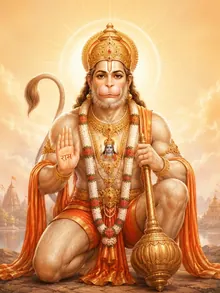
Aarti Kije Hanuman Lala Ki is the most widely sung aarti to Hanuman, recounting his strength, the search for Sita, the burning of Lanka, bringing the Sanjivani herb for Lakshman, and the slaying of Ahiravan. It opens with a Sanskrit shloka, followed by a refrain and six stanzas, with the refrain repeated after each one.
This page presents the full text in clean Devanagari, with a simple meaning for every stanza. Text size can be adjusted, and the full reading can also be printed.
No composer names himself within the aarti, so it's considered a traditional composition of unknown authorship. The final stanza names 'Tulsidas,' as devotional verse often does, but this doesn't conclusively establish Goswami Tulsidas as its author. It recounts Hanuman's strength, the search for Sita, the burning of Lanka, the Sanjivani episode, and the slaying of Ahiravan. The aarti is sung daily by Hanuman's devotees, and especially on Tuesdays and Saturdays.
Benefits of Reciting the Hanuman Aarti
It is believed that reciting this aarti daily with devotion destroys fear and negative energies and grants strength, courage, and self-confidence; reciting it especially on Tuesdays and Saturdays is considered highly beneficial.
Frequently asked questions
Who composed the Hanuman Aarti?
No composer names himself within the text, so it's considered a traditional composition of unknown authorship. Because the final stanza names 'Tulsidas,' it's sometimes credited to Goswami Tulsidas, though this isn't certain.
What is the structure of the aarti?
It has one Sanskrit shloka, one refrain, and six stanzas. The refrain is repeated after every stanza.
What is the best day and time to read it?
Singing it in the evening, with a lamp lit, on a Tuesday or Saturday is considered ideal.
Is it necessary to know the meaning?
Not necessary, but reading it with the meaning makes the devotion clearer. This page includes a simple meaning alongside every stanza.
What are the benefits of the Hanuman Aarti?
It is believed that reciting this aarti daily with devotion destroys fear and negative energies and grants strength, courage, and self-confidence; reciting it especially on Tuesdays and Saturdays is considered highly beneficial.