 Astha SangrahASTHA SANGRAHhttps://asthasangrah.com
Diwali (Deepavali)
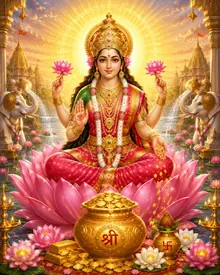
Diwali is the great festival of lights, celebrated on the Amavasya of the Kartik month with the worship of Maa Lakshmi and Lord Ganesh, marking the victory of good over evil.
The most auspicious time for Lakshmi Puja is during Pradosh Kaal, while Amavasya tithi is still active, so check a local panchang for the exact muhurat. Diwali is the main day of the five-day festival, Dhanteras, Naraka Chaturdashi, Diwali, Govardhan Puja, and Bhai Dooj; in 2026 and 2028, due to a shortened (kshaya) tithi, Naraka Chaturdashi and Diwali fall on the same day.
Significance of Diwali (Deepavali)
The word 'Diwali' means 'a row of lamps'. It is believed that Lord Rama returned to Ayodhya on this very Amavasya, after fourteen years of exile and his victory over Ravana, and the people welcomed him by lighting rows of oil lamps. That same tradition lives on today, in every home lighting lamps on Diwali.
It was on this same Amavasya that Maa Lakshmi emerged from the Samudra Manthan, which is why the goddess of wealth and prosperity is especially worshipped on this day, along with Lord Ganesh, the remover of obstacles. In some traditions, Maa Saraswati is also worshipped, seeking the blessing of knowledge and wisdom too.
Diwali is, in fact, a five-day festival, beginning with Dhanteras, moving through Naraka Chaturdashi, the main Diwali day (Lakshmi Puja), and Govardhan Puja, concluding with Bhai Dooj. Each day carries its own distinct significance and tradition.
How Diwali (Deepavali) Is Celebrated
Ahead of Diwali, homes are thoroughly cleaned and repainted, and the main entrance and courtyard are decorated with rangoli and flowers. In the evening, lamps are lit in every corner of the home.
During Pradosh Kaal, Maa Lakshmi and Lord Ganesh are worshipped with proper ritual, offering lotus flowers, puffed rice with sugar candy, and sweets. Business owners also worship their account ledgers on this day.
After the puja, sweets and gifts are exchanged with family and friends, new clothes are worn, and fireworks are set off. The celebration continues for five days, from Dhanteras through Bhai Dooj.
Diwali (Deepavali) Puja Vidhi
Bathe in the evening and wear clean clothes. Set up idols of Maa Lakshmi and Lord Ganesh at the puja space, and during Pradosh Kaal, offer lotus flowers, puffed rice with sugar candy, and sweets, light lamps, and perform the aarti. After the puja, share sweets with family and break the fast.
About Diwali (Deepavali)
Diwali is India's largest and most widely celebrated festival, observed on the Amavasya of the Kartik month with the worship of Maa Lakshmi and Lord Ganesh. This page covers Diwali's significance, the legend of Lord Rama's return to Ayodhya, the emergence of Maa Lakshmi, and the puja vidhi.
Detailed pages are also available for Diwali's other four days, Dhanteras, Naraka Chaturdashi, Govardhan Puja, and Bhai Dooj. The information on this page is presented with easy-to-read sizing and print support.
Frequently Asked Questions
When is Diwali observed?
Diwali is observed every year on the Amavasya tithi of the Kartik month, usually falling in October–November.
Why is Diwali celebrated?
Diwali is celebrated to mark Lord Rama's return to Ayodhya after fourteen years of exile and his victory over Ravana, as well as in remembrance of Maa Lakshmi's emergence from the Samudra Manthan.
What are the five days of Diwali?
The five days of Diwali are Dhanteras, Naraka Chaturdashi (Choti Diwali), the main Diwali (Lakshmi Puja), Govardhan Puja, and Bhai Dooj.
When is the auspicious muhurat for Lakshmi Puja?
The most auspicious time for Lakshmi Puja is considered to be the evening's Pradosh Kaal, while Amavasya tithi is active, with the exact timing changing every year and by city.
What is the difference between Diwali and Deepavali?
Both are names for the same festival. 'Deepavali' is the original Sanskrit term, meaning 'a row of lamps', while 'Diwali' is its popular Hindi form.