 Astha SangrahASTHA SANGRAHhttps://asthasangrah.com
Govardhan Puja (Annakut)
Govardhan Puja is the fourth day of the Diwali festival, commemorating Lord Krishna lifting the Govardhan hill, marked by offering a mountain of food known as Annakut.
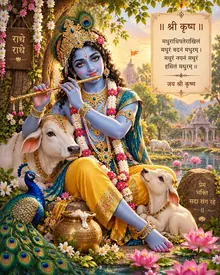
This same tithi is observed as the Gujarati New Year, 'Bestu Varas', in the Vikram Samvat calendar, on which the business community performs 'Chopda Pujan', the worship of new account ledgers.
Significance of Govardhan Puja (Annakut)
According to the legend, the people of Braj used to worship Lord Indra every year, praying for rain. The young Krishna explained to them that it was actually Govardhan hill, which sustained their cows and fields, that deserved worship instead of Indra. Angered by this, Indra unleashed a torrential downpour, and to protect the villagers, Krishna lifted the Govardhan hill on his little finger, sheltering the entire population of Braj under it for seven days.
After seven days, when Indra realized his mistake, he sought forgiveness from Krishna. Govardhan Puja is observed in remembrance of this event, carrying the message of respect for nature and the environment, and humility's victory over arrogance.
This same day is also observed in Gujarat as the New Year, 'Bestu Varas', according to the Vikram Samvat calendar, when merchants close their old account ledgers and worship new ones in a ritual called 'Chopda Pujan'.
How Govardhan Puja (Annakut) Is Celebrated
A symbolic form of the Govardhan hill is made in the courtyard using cow dung or clay, decorated with flowers, and worshipped by circumambulating it.
In temples, especially Vaishnav and ISKCON temples, Lord Krishna is offered 56 or 108 varieties of dishes, called 'Annakut', symbolically representing the mountain of food the people of Braj were able to grow, safe from the destructive rains.
Cows are also worshipped on this day, since in the legend the Govardhan hill sustained both the cows and the people of Braj. In Gujarat, the business community worships new account ledgers on this same day, marking the start of a new financial year.
Govardhan Puja (Annakut) Puja Vidhi
Bathe in the morning and make a symbolic form of the Govardhan hill in the courtyard using cow dung or clay, and decorate it with flowers. Circumambulate it and worship Lord Krishna. Then offer an Annakut bhog of 56, or as many dishes as feasible, perform the aarti, and worship the cows.
About Govardhan Puja (Annakut)
Govardhan Puja is the fourth day of the Diwali festival, commemorating the legend of Lord Krishna lifting the Govardhan hill to protect the people of Braj. This page covers the day's significance, the Annakut bhog tradition, and Gujarat's Bestu Varas.
See the separate pages for Diwali's other days, Dhanteras, Naraka Chaturdashi, Diwali, and Bhai Dooj. The information on this page is presented with easy-to-read sizing and print support.
Frequently Asked Questions
When is Govardhan Puja observed?
Govardhan Puja is observed the day after Diwali, on Kartik Shukla Pratipada tithi.
What is Annakut?
Annakut means 'a mountain of food', on this day, Lord Krishna is offered 56 or 108 varieties of dishes, arranged into a mountain-like display resembling the Govardhan hill.
Why did Lord Krishna lift the Govardhan hill?
To protect the people of Braj from the torrential rain sent by Lord Indra, Lord Krishna lifted the Govardhan hill on his little finger, sheltering everyone under it for seven days.
What is Bestu Varas?
Bestu Varas is the Gujarati New Year according to the Vikram Samvat calendar, observed on the same day as Govardhan Puja, when merchants worship their new account ledgers.