 Astha SangrahASTHA SANGRAHhttps://asthasangrah.com
Dussehra (Vijayadashami)
Dussehra, also called Vijayadashami, is celebrated on the tenth day of Shardiya Navratri, marking both Lord Rama's victory over Ravana and Maa Durga's victory over Mahishasura.
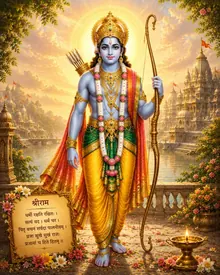
Dussehra is regarded as one of the 'Sade Teen Muhurats', a fully auspicious day on which no separate muhurat needs to be checked for any new undertaking. North India marks the day with Ravana Dahan, while Bengal observes the immersion of the Durga idol on the same day.
Significance of Dussehra (Vijayadashami)
The word 'Dussehra' means 'the removal of ten', symbolizing the destruction of Ravana's ten heads, or the ten vices they represent. It is believed that on this very tithi, Lord Rama slayed Ravana and won victory over Lanka, freeing Sita from her captivity. This is why the day is also called Vijayadashami, meaning 'the victory of the tenth tithi'.
According to legend, before his battle with Ravana, Lord Rama invoked and worshipped Maa Durga through an 'Akal Bodhan', an untimely invocation, performed outside its usual season, seeking victory. This is why the worship of Maa Durga through Shardiya Navratri and Rama's victory on Dussehra are celebrated as connected to one another.
In the Bengal tradition, the Durga idol worshipped over the nine days is immersed in a river or water body on Vijayadashami itself, in the belief that Maa Durga returns to her marital home in Kailash after her stay at her parents'. Dussehra is counted among India's most auspicious days, the 'Sade Teen Muhurats', on which any new undertaking can be started without checking a separate muhurat.
How Dussehra (Vijayadashami) Is Celebrated
In many cities of North India, giant effigies of Ravana, Kumbhakarna, and Meghnad are built in large grounds, and after Ramlila performances, are set ablaze in the evening in the ritual known as 'Ravana Dahan'. The event is regarded as a symbol of good's victory over evil.
In West Bengal, Odisha, and Assam, the Durga idol is immersed on the same day with a grand procession. Married women offer sindoor to Maa Durga and apply it to one another, in a ritual called 'Sindoor Khela'.
In many places, the Shami tree is worshipped in a ritual called 'Aparajita Puja', and Shami leaves are exchanged as a symbol of gold, along with Vijayadashami greetings. South India's Ayudha Puja tradition continues through this day as well.
Dussehra (Vijayadashami) Puja Vidhi
Bathe in the morning and worship Lord Rama and Maa Durga. Perform Aparajita Puja before a Shami tree and exchange its leaves as a gift. In the evening, watch the Ravana Dahan at the Ramlila ground, or perform the aarti of Rama and Durga at home and conclude the Navratri fast.
About Dussehra (Vijayadashami)
Dussehra, or Vijayadashami, is the festival celebrated on the tenth day of Shardiya Navratri, marking both Lord Rama's victory over Ravana and Maa Durga's victory over Mahishasura. This page covers Dussehra's significance, Ravana Dahan, Durga Visarjan, Shami Puja, and its place among the Sade Teen Muhurats.
See the separate pages for Navratri's preceding days, such as Ghatasthapana, Ashtami, and Maha Navami. The information on this page is presented with easy-to-read sizing and print support.
Frequently Asked Questions
When is Dussehra observed?
Dussehra is observed on the tenth day of Shardiya Navratri, on Ashwin Shukla Dashami tithi.
What is the difference between Dussehra and Vijayadashami?
Both are two names for the same festival, 'Dussehra' points to the destruction of the ten vices, while 'Vijayadashami' points to the victory achieved on the tenth tithi.
Why is Ravana Dahan performed?
Ravana Dahan commemorates Lord Rama's victory over Ravana, and burning the effigies of Ravana, Kumbhakarna, and Meghnad conveys the message of good's triumph over evil.
Why is Durga Visarjan performed on Dussehra itself?
After nine days of Navratri worship, Maa Durga is believed to return to Kailash from her parents' home on Dashami tithi, and it is this belief that fixes the idol's immersion on this very day.
Can auspicious ventures be started on Dussehra?
Yes, Dussehra is considered one of the Sade Teen Muhurats, a fully auspicious day, so a new venture, a vehicle purchase, or a housewarming can be started on this day without checking a separate muhurat in the panchang.