
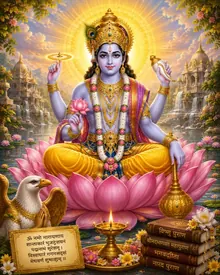
This Ekadashi falls exactly one day before Dhanteras, and is regarded as signaling the start of Diwali's five-day celebration. Check a local panchang for the exact date.
Significance of Rama Ekadashi
According to legend, King Muchukunda's daughter Chandrabhaga was married to a prince named Shobhan, who bore a curse that he could not go without food on any Ekadashi, or else he would die.
Once, while residing in King Muchukunda's kingdom, Shobhan mustered the courage to go without food on Rama Ekadashi, but due to his body's weakness, he died that very night. His wife Chandrabhaga, owing to the values instilled by her father, did not become a Sati, but remained at her in-laws' home, absorbed in devotion to her husband.
By the merit of observing Rama Ekadashi, Shobhan attained a divine city, but since it stood on Mount Mandakini, it seemed unstable. On a sage's advice, Chandrabhaga herself observed the vow of Rama Ekadashi and dedicated its merit to her husband, which made Shobhan's city stable and eternal, and the two lived there happily thereafter.
How Rama Ekadashi Is Celebrated
Devotees bathe in the morning and take the vow, observing a fruit-based fast through the day. Lord Vishnu is worshipped, and the legend of Rama Ekadashi is heard.
Since this Ekadashi falls one day before Dhanteras, many homes also begin their Diwali cleaning and decoration preparations from this very day. The fast is broken the next day, on Dwadashi, within the scripturally prescribed Parana muhurat.
This vow is observed especially with the wish for freedom from life's hardships, poverty, and instability, and the legend of Shobhan and Chandrabhaga is regarded as symbolizing how a couple's combined vow and merit brings stability to life.
Rama Ekadashi Puja Vidhi
Bathe in the morning, take the vow, and observe a fruit-based fast. Worship Lord Vishnu and listen to the legend of Rama Ekadashi. The next day, on Dwadashi, give alms and break the fast within the scripturally prescribed Parana muhurat.
About Rama Ekadashi
Rama Ekadashi is the vow observed on Kartik Krishna Ekadashi, one day before Dhanteras, for freedom from hardship and poverty. This page covers the vow's significance, the legend of Shobhan and Chandrabhaga, and the vidhi for observing it.
The information on this page is presented with easy-to-read sizing and print support.
Frequently Asked Questions
When is Rama Ekadashi observed?
This vow is observed every year on Kartik Krishna Ekadashi, one day before Dhanteras.
What is the legend of Shobhan and Chandrabhaga?
The cursed Prince Shobhan gave up his life while observing the vow of Rama Ekadashi, and his wife Chandrabhaga also observed the vow herself and dedicated its merit to him, which made Shobhan's divine city stable and eternal.
How is Rama Ekadashi connected to Diwali?
Rama Ekadashi falls exactly one day before Dhanteras, so it is also regarded as signaling the start of Diwali's five-day celebration.
What is the benefit of observing Rama Ekadashi?
It is believed that this vow grants freedom from life's hardships, poverty, and instability, and brings stability and prosperity to the home and family.