
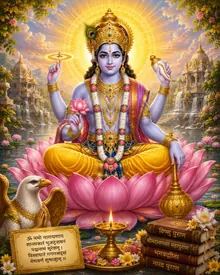
This festival falls a few days after Krishna Janmashtami, in the Krishna Paksha of the Bhadrapada month. It is also known as 'Annada Ekadashi'. Check a local panchang for the exact date.
Significance of Aja Ekadashi
In the Padma Purana, Lord Krishna tells Yudhishthira that long ago there was Harishchandra, a world-ruling king true to his word. Bearing the fruit of some past deed, he fell from his kingdom. He sold his wife and son, then sold himself, and though virtuous he had to serve a Chandala, taking the shrouds from the dead. Even so he did not swerve from truth.
After many years in this servitude, as the king sat drowned in grief, the sage Gautama came to him. The king told him all his sorrow. Gautama said that the auspicious 'Aja' Ekadashi of Bhadon's dark fortnight was coming, on the seventh day from then; he should fast that day and keep vigil at night, and his sin would come to an end.
King Harishchandra kept the vow, and by its power he passed beyond all his sorrows: he was reunited with his wife and his dead son was restored to life. Drums sounded in the sky and flowers rained down, he regained his kingdom free of rivals, and in the end went to heaven with his citizens and kin. According to the Purana, reading or hearing this mahatmya brings the merit of the Ashvamedha sacrifice.
How Aja Ekadashi Is Celebrated
Devotees bathe in the morning and take the vow, observing a fruit-based or waterless fast through the day. Lord Vishnu is worshipped, and the legend of Aja Ekadashi is heard.
The night is spent in vigil with bhajan-kirtan, and the next day, on Dwadashi, alms are given and the fast is broken within the scripturally prescribed Parana muhurat.
This vow is observed especially by devotees seeking freedom from life's severe hardships, debt, and poverty, and it inspires observing the vow with truth and patience, just as King Harishchandra did.
Aja Ekadashi Puja Vidhi
Bathe in the morning, take the vow, and observe a fruit-based or waterless fast. Worship Lord Vishnu and listen to the legend of Aja Ekadashi. The next day, on Dwadashi, give alms and break the fast within the scripturally prescribed Parana muhurat.
About Aja Ekadashi
Aja Ekadashi is the vow observed on Bhadrapada Krishna Ekadashi for freedom from severe hardship and sin. This page covers the vow's significance, the legend of King Harishchandra, and the vidhi for observing it.
Frequently Asked Questions
Why is Aja Ekadashi celebrated?
This Ekadashi is kept for freedom from grave hardship and sin. Its story belongs to the truthful King Harishchandra, who kept this vow at the sage Gautama's word and by its power regained his kingdom and family.
When is Aja Ekadashi observed?
This vow is observed every year on Bhadrapada Krishna Ekadashi, a few days after Krishna Janmashtami.
How is King Harishchandra's legend connected to Aja Ekadashi?
King Harishchandra, who had sold his kingdom, his wife, his son and himself and was serving a Chandala, was told of Aja Ekadashi by the sage Gautama. By the vow's power he was reunited with his wife, his dead son came back to life, his kingdom returned, and in the end he went to heaven.
Why is Aja Ekadashi also called Annada Ekadashi?
In some regions like Bengal and Odisha, this Ekadashi is also known as 'Annada Ekadashi', though its date and core significance remain the same as Aja Ekadashi.
What is the benefit of observing Aja Ekadashi?
It is believed that this vow grants freedom from life's most severe hardships, sins, and poverty, and when observed with devotion, also paves the way toward liberation.