 Astha SangrahASTHA SANGRAHhttps://asthasangrah.com
Shri Shattila Ekadashi Vrat Katha
The Shattila Ekadashi Vrat Katha is the story of Shattila Ekadashi in Magh's dark fortnight, in which the sage Pulastya teaches Dalbhya the vow's rites with sesame, and then Lord Krishna tells of the brahmin woman who kept many vows but never gave food in charity.
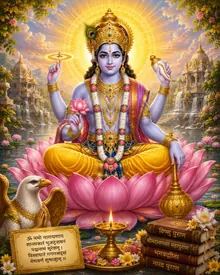
Chapter 1 · Dalbhya's Question and Pulastya's Rite
Yudhishthira asked, 'Which Ekadashi falls in Magh's dark fortnight?' Lord Shri Krishna said, 'Listen, lion among kings: the Ekadashi of Magh's dark fortnight is renowned as Shattila and destroys every sin. Hear the auspicious, sin-removing story of Shattila that the great sage Pulastya told Dalbhya.' Dalbhya had asked: 'Brahmin, the beings who come to the mortal world commit sins such as killing a brahmin, steal others' wealth and are deluded by others' vices. What is the way for them not to go to hell? Lord, tell me truly of a way by which sin is quieted without hardship, by some small gift.'
Pulastya said, 'Fortunate one, well asked, well asked. This is a secret and rare thing, which even Vishnu, Brahma, Indra and the gods have told no one. Best of brahmins, since you have asked, I will tell you. When the month of Magh comes, one should bathe and be pure, keep the senses in check, and give up desire, anger, pride, envy, greed and slander. Remembering the god of gods and washing the feet with water, take up cow-dung fallen on the ground, mix sesame and cotton into it and make one hundred and eight small cakes, without hesitation. Then in Magh, when the Ardra or Mula nakshatra comes, take up the disciplines of the dark fortnight's Ekadashi. Hear from me the rite for that holy time.'
'Having bathed well, restrained and pure, worship the god of gods. Chant Shri Krishna's names again and again, and if any slip is made, take the name again. Keep vigil at night and offer homa, and on the second day worship Hari, lord of the gods, again: with sandal, aloewood, camphor, food offerings and khichdi, remembering him by name and by the name Krishna again and again. Then, with a pumpkin, a coconut or a citron, or if none is to be had, with ten areca nuts, worship Janardana by rite and offer arghya.'
Chapter 2 · The Arghya Mantra, the Gifts and the Six Uses of Sesame
'While offering the arghya, say: Krishna, Krishna, you are compassionate; be the refuge of those who have none. Supreme person, be gracious to us who are drowning in the ocean of worldly life. Lotus-eyed one, salutations to you; maker of the universe, salutations to you. Subrahmanya, great being, first-born Lord, salutations to you. Master of the world, together with Lakshmi accept this arghya I offer. This is the mantra of the arghya.'
'Then honour a brahmin and give him a pot full of water, an umbrella, shoes and clothes, saying: by this may Shri Krishna be pleased with me. Best of brahmins, give a black cow to a worthy brahmin as you are able, and let the wise give a vessel full of sesame. O sage, black sesame is held best for bathing and for eating; give it with care to a worthy brahmin as far as you can.'
'Brahmin, for as many sesame plants as could grow if the sesame given were sown, for that many thousand years the giver stays honoured in heaven. One who bathes with sesame, rubs sesame paste on the body, offers sesame in homa, drinks water mixed with sesame, gives sesame and eats sesame: these six uses of sesame destroy sin.'
Chapter 3 · The Brahmin Woman Who Never Gave Food
Narada asked, 'Krishna, Krishna, mighty-armed, maker of the universe, salutations to you. Yadava, what is the fruit of Shattila Ekadashi? If you are pleased, tell me its story.' Shri Krishna said, 'O king, I will tell you as it happened and as I saw it. Narada, long ago in the mortal world there was a brahmin woman, always devoted to vows and the worship of the gods. She kept month-long fasts, was ever my devotee, kept the fasts of Krishna and was devoted to my worship. Best of brahmins, her body had grown thin from fasting. That great, chaste woman gave houses and the like with devotion to gods, brahmins and maidens, and was always engaged in the severest vows. But, O brahmin, she gave no alms to beggars, and never once satisfied brahmins with food.'
'After a long time I thought: these severe vows have surely purified her body, and by mortifying her body she has won Vishnu's world; but she has never given food, from which comes the highest satisfaction. Knowing this, O brahmin, I took the form of a kapalika, a skull-bearing ascetic, came to the mortal world with a begging bowl and asked her for alms. She said: brahmin, where have you come from? Tell me here before me. I said again: lovely one, give me alms. Then, in great anger, she threw a lump of clay into the copper bowl. O brahmin, after that I returned to heaven.'
'After a long time that great-vowed ascetic woman came to heaven in her own body by the power of her vows. For giving the lump of clay she received a lovely house, but, best of brahmins, it had no heaps of grain. When she looked inside the house she saw nothing at all there. Then, O brahmin, she came out of the house to me and spoke in great anger: Janardana, I kept many vows, severe austerities and fasts, and worshipped the Lord, protector of all the worlds, yet nothing is to be seen in my house.'
'Then I said to her: great-vowed one, go to your house. The wives of the gods will come to see you, full of curiosity and wonder. Do not open the door until you are told the merit of Shattila. When told this, the mortal woman went away. Just then the wives of the gods came there and said: auspicious one, we have come to see you; open the door, let us see you. The mortal woman said: if seeing me is your purpose, then, in return for opening the door, truly tell me above all the merit of the Shattila vow.'
Shri Krishna said, 'None of them told her the vow of Shattila Ekadashi. Then another said: I simply must see this mortal woman. So, opening the door, they saw the mortal woman: no goddess, no gandharvi, no asuri, no naga woman was like her; best of brahmins, such a woman had never been seen before. On the goddesses' instruction she kept the Shattila vow. That mortal woman's true vow brought her both enjoyment and liberation, and in a moment she gained beauty and radiance. By the power of Shattila her house was filled with wealth, grain, clothes, gold and silver, with every good thing.'
'So one should not be very greedy, and should give up deceit over wealth. One should give sesame, clothes and the like according to one's means. Best of brahmins, by fasting on Shattila a person gains health birth after birth, and suffers neither poverty, nor hardship, nor misfortune. O lord of the earth, one who gives sesame by this rite is surely freed from all sins without effort. Best of kings, a gift given by rite to a worthy person destroys every sin, and costs the body no hardship at all.'
How to Read Shri Shattila Ekadashi Vrat Katha
In Magh, bathe, give up desire, anger, greed and slander, and make 108 small cakes of cow-dung mixed with sesame and cotton. On Magh Krishna Ekadashi, fast, chant Shri Krishna's names, keep vigil and offer homa at night, and offer arghya with a pumpkin, coconut, citron or ten areca nuts using the mantra 'Krishna Krishna kripalustvam'. Give a brahmin a pot of water, an umbrella, shoes, clothes and a vessel of sesame, and practise the six uses of sesame: bath, paste, homa, water, gift and food.
About Shri Shattila Ekadashi Vrat Katha
The Shattila Ekadashi Vrat Katha is told in three chapters. In the first, Dalbhya asks how sinful beings may escape hell by a small gift, and the sage Pulastya teaches the rite: 108 cakes of cow-dung, sesame and cotton in Magh, and the Ekadashi worship. The second gives the arghya mantra, the gifts to a brahmin and the six uses of sesame. In the third, Krishna tells of the brahmin woman who kept many vows but never gave food, gave the Lord, disguised as a kapalika, a lump of clay, found an empty house in heaven, and prospered once the goddesses told her of the Shattila vow.
This vow is kept on the Ekadashi of Magh's dark fortnight. 'Shattila' means the one with six uses of sesame.
The Shattila Ekadashi Vrat Katha has no named author. It is the forty-second chapter of the Uttara Khanda of the Padma Purana. In it Lord Krishna tells Yudhishthira the rite that the sage Pulastya taught Dalbhya, and then, at Narada's asking, tells the story of the brahmin woman. The text given here is a verse-by-verse translation of that chapter's 52 Sanskrit verses.
Benefits of the Shattila Ekadashi Vrat Katha
According to the katha, one who fasts on Shattila gains health birth after birth and suffers no poverty, hardship or misfortune; one who gives sesame by the rite is freed from all sins without effort; and the giver stays in heaven for as many thousand years as the plants the gifted sesame could grow.
Frequently asked questions
What are the six uses of sesame on Shattila Ekadashi?
The six uses named in the katha are: bathing with sesame, a sesame paste rub, homa with sesame, drinking water mixed with sesame, giving sesame and eating sesame.
Why did the brahmin woman find an empty house in heaven?
She had kept many vows and austerities but never given food. When Lord Shri Krishna came to her as a kapalika asking for alms, she angrily gave him a lump of clay. That gift earned her a house, but one empty of grain and wealth. When she kept the Shattila vow, the house was filled with every good thing.
With what is the arghya offered on Shattila Ekadashi?
According to the katha, arghya is offered to Lord Janardana with a pumpkin, a coconut or a citron, or if these are not to be had, with ten areca nuts, using the mantra 'Krishna Krishna kripalustvam'.
How many chapters does the Shattila Ekadashi Vrat Katha have?
It has three chapters, based on the 52 verses of the forty-second chapter of the Padma Purana's Uttara Khanda.