 Astha SangrahASTHA SANGRAHhttps://asthasangrah.com
Shri Papankusha Ekadashi Vrat Katha
The Papankusha Ekadashi Vrat Katha is the glory of Papankusha Ekadashi in Ashwin's bright fortnight, in which Lord Krishna tells Yudhishthira that worshipping him as Padmanabha and fasting on this day destroys sin and saves one from the torments of Yama.
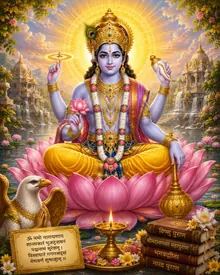
Chapter 1 · The Padmanabha Puja and the Vow's Glory
Yudhishthira said, 'Madhusudana, kindly tell me which Ekadashi falls in the bright fortnight of Ashwin.' Shri Krishna said, 'Listen, lord of kings, I will tell you its sin-destroying glory. The Ekadashi of Ashwin's bright fortnight is renowned as Papankusha, a supreme tithi that removes every sin. On that day one should worship me by the name Padmanabha.'
This vow grants every desired fruit and gives people heaven and liberation. The fruit a sage of controlled senses wins by long and severe austerity is gained on this day by bowing to the Lord who bears Garuda on his banner. Even one who, deluded, has sinned many times does not go to hell after bowing to Hari, the remover of all sins. The merit of every tirtha and holy temple on earth is gained by chanting Vishnu's name. Those who take refuge in Lord Janardana, bearer of the Sharnga bow, never suffer the torments of Yama's world. Even one who fasts on a single Ekadashi by chance does not undergo Yama's torment, though he has committed terrible sin.
One who, being a Vaishnava, reviles Lord Shiva does not reach the world of the Vaishnavas and surely goes to hell. And one who, being a Shaiva or Pashupata, reviles Lord Vishnu is cooked in the dreadful Raurava hell for as long as fourteen Indras reign. Nothing in the three worlds is as purifying as this sin-destroying vow of Padmanabha. O lord of men, sins stay in this body only until a person fasts on this auspicious day of Padmanabha.
A thousand Ashvamedha sacrifices and a hundred Rajasuyas are not worth a sixteenth part of an Ekadashi fast. There is no vow in the world equal to Ekadashi; those who have kept it even on some pretext do not go to Yama. This Ekadashi grants heaven and liberation, keeps the body free of disease, and gives a wife, sons, wealth and friends. O king, neither the Ganga, nor Gaya, nor Kashi, nor Pushkar, nor even Kurukshetra brings as much merit as this day of Hari. O protector of the earth, by fasting on Hari's day and keeping vigil at night, Vishnu's abode is reached without effort.
Chapter 2 · Uplifting the Generations, the Gifts, and the Fruit of Merit
Lord of kings, one who keeps this vow uplifts ten generations on the mother's side, ten on the father's side and ten on the wife's side. All of them go to Hari's abode four-armed, in divine form, bearing the banner of Garuda, wearing garlands and clad in yellow. Best of kings, whoever fasts on Ekadashi, whether in childhood, youth or old age, surely never meets a bad end. By fasting on Papankusha in Ashwin's bright fortnight, a person is freed of every sin and goes to Hari's world.
Whoever gives gold, sesame, land, a cow, food, water, shoes, an umbrella, clothes and the like on this day never sees Yama. One whose days come and go without merit is like a blacksmith's bellows: he breathes, yet he is not alive. Best of kings, even a poor person should make every day fruitful by bathing, giving and other good acts, as far as he is able.
Those who do meritorious acts such as homa, bathing, japa, meditation and sacrifice never see that dreadful torment of Yama. Those seen in the world as long-lived, wealthy, nobly born and free of disease are just such doers of merit. What need to say more: through adharma people fall into misfortune, and through dharma they rise to heaven; of this there is no doubt. Sinless king, I have told you the glory of Papankusha that you asked about. What more do you wish to hear?
How to Read Shri Papankusha Ekadashi Vrat Katha
On Papankusha Ekadashi, bathe in the morning, take the vow of fasting, worship Lord Vishnu as Padmanabha and chant his names. Keep vigil at night, give gold, sesame, food, water, shoes, an umbrella or clothes as you are able, and break the fast the next day, Dwadashi, within the parana muhurat.
About Shri Papankusha Ekadashi Vrat Katha
The Papankusha Ekadashi Vrat Katha is told in two chapters. In the first, Lord Krishna says that worshipping, bowing to and chanting the names of his Padmanabha form on this day brings the fruit of austerity and of every tirtha, and that this vow surpasses even the Ashvamedha and Rajasuya sacrifices. The second describes the uplifting of ten generations each on the mother's, father's and wife's sides, the gifts of this day and the fruit of meritorious deeds.
'Papankusha' means a goad on sin. This vow is kept on the Ekadashi of Ashwin's bright fortnight, two days after Dussehra.
The Papankusha Ekadashi Vrat Katha has no named author. It is the fifty-ninth chapter of the Uttara Khanda of the Padma Purana, in which Lord Krishna tells Yudhishthira the glory of this vow. It contains no character's story; the whole chapter describes the vow's greatness. The text given here is a verse-by-verse translation of its 28 Sanskrit verses.
Benefits of the Papankusha Ekadashi Vrat Katha
The katha itself says that this Ekadashi grants heaven and liberation, keeps the body free of disease and gives a wife, sons, wealth and friends, and that one who keeps it uplifts ten generations on each of three sides and goes to Hari's abode.
Frequently asked questions
What story does the Papankusha Ekadashi Vrat Katha tell?
This chapter of the Padma Purana contains no character's story. In it Lord Krishna himself tells Yudhishthira the glory of the vow. The tale of a fowler of the Vindhya hills and the sage Angira, told in many places, is not part of this Puranic passage.
In which form is the Lord worshipped on Papankusha Ekadashi?
At the very start of the katha Krishna says that on this day he should be worshipped by the name Padmanabha, the Vishnu from whose navel the lotus rises.
What should be given on Papankusha Ekadashi?
According to the katha, one who gives gold, sesame, land, a cow, food, water, shoes, an umbrella and clothes on this day never sees Yama. Even a poor person should bathe and give what they can.
How many chapters does the Papankusha Ekadashi Vrat Katha have?
It has two chapters, based on the 28 verses of the fifty-ninth chapter of the Padma Purana's Uttara Khanda.