 Astha SangrahASTHA SANGRAHhttps://asthasangrah.com
Shri Indira Ekadashi Vrat Katha
The Indira Ekadashi Vrat Katha is the story of Indira Ekadashi in Ashvina's dark fortnight, in which Lord Krishna tells Yudhishthira how the sage Narada saw the father of King Indrasena of Mahishmati in Yama's world, carried his message to the king, and taught the rite of the Indira vow, by which the king's father rode Garuda to Vishnu's world.
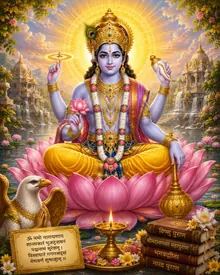
Chapter 1 · The Sage Narada and the Message from Yama's World
Yudhishthira said, 'Madhusudana, out of your grace tell me the name of the Ekadashi of Ashvina's dark fortnight.' Shri Krishna said, 'The Ekadashi of Ashvina's dark fortnight is known by the name Indira. By the power of its vow a great sin is destroyed, and it gives a good end even to ancestors who have fallen into low births. O king, listen closely to this excellent, sin-removing story, by merely hearing which one gains the fruit of the Vajapeya sacrifice. Long ago, in the Satya age, there was a famous prince, Indrasena, king of Mahishmati. He cared for his people by dharma, and his fame spread far. Blessed with sons and grandsons and with wealth and grain, that king of Mahishmati was devoted to Vishnu; he chanted the liberating names of Govinda and spent his time by rule in meditation on the Self. One day, as the king sat at ease in his court, the sage Narada came down from the sky and arrived there. Seeing him, the king rose with joined palms, worshipped him by rite and seated him, and when the sage sat at ease, said: Best of sages, by your grace all is well with me. Today, at the sight of you, all my rites of sacrifice have borne fruit. Divine sage, be gracious and tell me why you have come.'
Narada said, 'Tiger among kings, hear my wondrous news. Best of kings, I went from Brahma's world to Yama's world. There Yama worshipped me with devotion, and I sat on a fine seat. In the court of Yama, lord of shraddha, I saw your father, righteous and truthful and a doer of great merit, yet there in Yama's service through the fault of a lapse in some vow. Lord of men, he spoke a message; hear it: Brahmin, the king of Mahishmati is known as Indrasena. Tell him that through some obstacle arising from a former birth I am held in Yama's presence. Son, send me to heaven by giving me the merit of Indira. Hearing this, O king, I have come to you. O king, keep the Indira vow so that your father may reach heaven. By the power of that vow your father will go to heaven.'
Chapter 2 · The Rite of the Indira Vow
The king said, 'Lord, out of your grace tell me the Indira vow: by what rite it should be kept, in which fortnight and on which tithi.' Narada said, 'King of kings, listen; I will tell you the auspicious rite of this vow. On the auspicious tenth day of Ashvina's dark fortnight, bathe in the morning with a mind full of faith. Then at midday, collected, bathe again, and with faith perform a shraddha for the pleasure of the ancestors. Then eat a single meal and sleep on the ground at night. When the clear dawn comes, on the day of Ekadashi, rinse the mouth without using a tooth-twig, and with devotion take the vow of the fast: lotus-eyed Achyuta, today I will give up every pleasure and stay without food, and I will eat tomorrow; be my refuge.'
'Having taken the vow in this way, at midday bathe by rite before the Shalagram stone. Worship Hrishikesha with incense, fragrance and the like, and keep vigil at night beside Keshava. Then at dawn, on the day of Dwadashi, worship Hari with devotion and perform the shraddha by rite. Perform the shraddha with faith for the pleasure of the ancestors; a shraddha made with wheat flour is pure. O king, with barley, rice, sesame, urad, wheat and chickpeas, and honouring them with gifts, feed the brahmins. Then, keeping silence, eat yourself together with kin, daughters' sons, sons and others. O king, keep this vow by this rite without sloth. Lord of the earth, your ancestors will go to Vishnu's world.' Saying this to the king, O king, the sage vanished.
Chapter 3 · The King's Vow and His Father's Release
'With his queens, his sons and his servants, the king kept that excellent vow by the rite he had been told. Son of Kunti, when the vow was done, flowers rained from the sky, and the king's father, riding on Garuda, went to Hari's abode. The royal sage Indrasena too, having ruled a kingdom free of enemies, placed his son on the throne and went to heaven himself. I have told you this glory of the Indira vow. O king, by reading and hearing it a person is freed from every sin, and after enjoying every pleasure in this world, dwells long in Vishnu's world.'
How to Read Shri Indira Ekadashi Vrat Katha
On Ashvina Krishna Dashami, bathe in the morning and at midday, perform a shraddha for the ancestors at midday, eat a single meal and sleep on the ground at night. On Ekadashi, rinse the mouth without a tooth-twig, take the vow of the fast, bathe and worship before the Shalagram at midday, worship Lord Hrishikesha with incense and fragrance, and keep vigil at night. On Dwadashi, worship Hari at dawn, perform the ancestors' shraddha with wheat flour, feed brahmins, and then eat with your family, keeping silence.
About Shri Indira Ekadashi Vrat Katha
The Indira Ekadashi Vrat Katha is told in three chapters. In the first, the sage Narada tells Indrasena, the righteous king of Mahishmati, that he saw the king's father in Yama's court, held there by the fault of a lapse in a vow and asking for the merit of the Indira vow. In the second, Narada gives the full rite: the shraddha on Dashami, the fast and vigil on Ekadashi, and the shraddha on Dwadashi. In the third, the king keeps the vow with his household, and his father rides Garuda to Vishnu's world.
This vow is kept on the Ekadashi of Ashvina's dark fortnight, in the midst of Pitru Paksha, which gives it special importance for the good end of the ancestors.
The Indira Ekadashi Vrat Katha has no named author. It is the fifty-eighth chapter of the Uttara Khanda of the Padma Purana, in which Lord Krishna himself tells Yudhishthira the story of King Indrasena and the sage Narada. The text given here is a verse-by-verse translation of that chapter's 36 Sanskrit verses.
Benefits of the Indira Ekadashi Vrat Katha
According to the katha, Indira Ekadashi destroys great sins and gives a good end even to ancestors fallen into low births; by this vow King Indrasena's father went from Yama's world to Vishnu's world; and reading or hearing it frees a person from every sin, bringing happiness in this world and then Vishnu's world.
Frequently asked questions
How many chapters does the Indira Ekadashi Vrat Katha have?
It has three chapters, based on the 36 verses of the fifty-eighth chapter of the Padma Purana's Uttara Khanda.
Why was King Indrasena's father in Yama's world?
The sage Narada says the king's father was righteous, truthful and a doer of great merit, but through the fault of a lapse in some vow, an obstacle from a former birth, he was held in Yama's court.
When should the shraddha be performed for Indira Ekadashi?
According to this chapter of the Padma Purana, perform the ancestors' shraddha at midday on Dashami after bathing, and on Dwadashi, after worshipping Hari at dawn, perform the shraddha again with wheat flour and feed brahmins. Ekadashi itself is for the fast, bathing and worship before the Shalagram, and the night vigil.