 Astha SangrahASTHA SANGRAHhttps://asthasangrah.com
Shri Varuthini Ekadashi Vrat Katha
The Varuthini Ekadashi Vrat Katha is the glory of Varuthini Ekadashi in Vaishakha's dark fortnight, in which Lord Krishna tells Yudhishthira that this vow gives good fortune, enjoyment and liberation, that its fruit equals the gift of learning, the highest of all gifts, and what the one keeping the vow should give up from Dashami to Dwadashi.
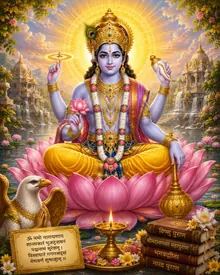
Chapter 1 · Varuthini's Glory and the Highest of Gifts
Yudhishthira said, 'Vasudeva, salutations to you. What is the Ekadashi of Vaishakha's dark fortnight called? Tell me its glory.' Shri Krishna said, 'O king, the Ekadashi of Vaishakha's dark fortnight is known as Varuthini, and it gives good fortune in this world and the next. By the vow of Varuthini alone one always has happiness, sin wanes and good fortune is gained. An unfortunate woman who keeps it gains good fortune. It gives enjoyment and liberation to all people, takes away every human sin and cuts the bond of returning again and again to the womb. By the vow of Varuthini alone Mandhata went to heaven, and so did Dhundhumara and many other kings. By it Lord Shiva was freed from Brahma's skull. One who keeps the Varuthini vow gains a fruit equal to that of a person who practises austerity for ten thousand years, or who gives a bhara of gold at Kurukshetra during a solar eclipse.'
'One who keeps the Varuthini vow with faith gains what he desires in this world and the next. Best of kings, it is holy and makes holy, destroys the gravest sins, and gives enjoyment and liberation to those who keep it. Best of kings, the gift of an elephant surpasses the gift of a horse, the gift of land surpasses that of an elephant, and the gift of sesame is greater still. Greater than that is the gift of gold, and greater than gold the gift of food. There never was and never will be a gift greater than food, for ancestors, gods and humans are all satisfied by food. Best of kings, the wise have called the giving of a daughter in marriage equal to it, and the Lord himself has said the gift of a cow is equal too. Greater than all these gifts is the gift of learning.'
'By keeping the Varuthini vow a person gains that same fruit. Those who, deluded by sin, live on a daughter's wealth go, when their merit is spent, to a hell full of torment. So one should take every care never to take a daughter's wealth. King of kings, one who out of greed sells a daughter and takes the money is surely born a cat in the next life. O king, the merit of one who, as far as he is able, adorns a daughter with ornaments and gives her in marriage in a spirit of virtue cannot be counted even by Chitragupta. By keeping the Varuthini vow a person gains a fruit equal to that.'
Chapter 2 · The Rules for Dashami, Ekadashi and Dwadashi
'The Vaishnava keeping the vow should give up these ten on Dashami: eating from a bell-metal vessel, urad, masoor, chickpeas, kodo millet, leafy greens, honey, another's food, eating twice and intercourse. On Ekadashi he should give up these eleven: gambling, sleep, betel, cleaning the teeth with a twig, speaking ill of others, slander, theft, violence, sexual pleasure, anger and lying. On Dwadashi he should give up these twelve: bell-metal vessels, urad, liquor, honey, oil, speaking with the fallen, exercise, travel, eating twice, intercourse, riding on the back of an ox and food made of masoor.'
'O king, for those who have kept Varuthini by this rite, it wipes out every sin and at the end grants an imperishable state. Those who keep vigil at night and worship Lord Madhusudana are freed from every sin and reach the supreme state. So those who fear sin should keep this vow with every effort. One who fears Yama should be sure to keep the Varuthini vow. O king, reading and hearing this brings the fruit of giving a thousand cows, and one is freed from every sin and honoured in Vishnu's world.'
How to Read Shri Varuthini Ekadashi Vrat Katha
On Dashami eat a single sattvic meal, avoiding bell-metal vessels, urad, masoor, chickpeas, kodo millet, leafy greens, honey and another's food. On Vaishakha Krishna Ekadashi bathe in the morning, take the vow of fasting, worship Lord Madhusudana, stay away from gambling, sleep, betel, slander, anger and lies, and keep vigil at night. On Dwadashi break the fast within the parana muhurat, and on that day too avoid eating twice, oil, honey and travel.
About Shri Varuthini Ekadashi Vrat Katha
The Varuthini Ekadashi Vrat Katha is told in two chapters. In the first, Lord Krishna says that by this vow Mandhata and Dhundhumara went to heaven and Lord Shiva was freed from Brahma's skull, then ranks the gifts and says that this vow's fruit equals the gift of learning, the greatest of all, and the giving of a daughter in marriage. The second gives the ten things to give up on Dashami, the eleven on Ekadashi and the twelve on Dwadashi, and the fruit of the vow.
This vow is kept on the Ekadashi of Vaishakha's dark fortnight. This chapter of the Padma Purana contains no story; tales such as Mandhata's that are sometimes attached to this Ekadashi are not part of this text.
The Varuthini Ekadashi Vrat Katha has no named author. It is the forty-eighth chapter of the Uttara Khanda of the Padma Purana, in which Lord Krishna himself tells Yudhishthira the glory and rules of this vow. The chapter has no story, only the vow's glory. The text given here is a verse-by-verse translation of its 25 Sanskrit verses.
Benefits of the Varuthini Ekadashi Vrat Katha
According to the katha, Varuthini gives good fortune in this world and the next, takes away every sin and cuts the bond of repeated birth; its fruit equals ten thousand years of austerity and a gift of gold at Kurukshetra during a solar eclipse; and reading or hearing it brings the fruit of giving a thousand cows.
Frequently asked questions
Is there a story for Varuthini Ekadashi?
The forty-eighth chapter of the Padma Purana's Uttara Khanda, which is the glory of Varuthini, tells no story. In it Lord Krishna himself tells Yudhishthira the vow's glory, the ranking of gifts and the rules of the vow, and says only that by this vow Mandhata and Dhundhumara went to heaven.
What should be given up on Varuthini Ekadashi?
On Ekadashi one should give up these eleven: gambling, sleep, betel, cleaning the teeth with a twig, speaking ill of others, slander, theft, violence, sexual pleasure, anger and lying. Dashami and Dwadashi have their own rules too, such as avoiding bell-metal vessels, urad, masoor, honey and eating twice.
Which gift does the Varuthini katha call the greatest?
The katha ranks the gifts as horse, elephant, land, sesame, gold and food, and calls the gift of food equal to giving a daughter in marriage and to the gift of a cow. But greater than all is the gift of learning, and one who keeps the Varuthini vow gains a fruit equal to it.