 Astha SangrahASTHA SANGRAHhttps://asthasangrah.com
Shri Mohini Ekadashi Vrat Katha
The Mohini Ekadashi Vrat Katha is the story of Mohini Ekadashi in Vaishakha's bright fortnight, in which the sage Vasishtha tells Shri Rama how Dhrishtabuddhi, the sinful son of Dhanapala, a virtuous merchant of Bhadravati, was driven from home, wandered the forest, reached the hermitage of the sage Kaundinya, and through the vow the sage taught him was freed from sin and went to Vishnu's world.
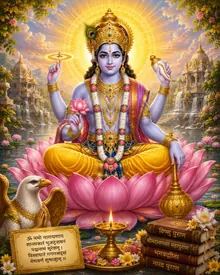
Chapter 1 · Shri Rama's Question and Mohini's Glory
Yudhishthira said, 'Janardana, what is the Ekadashi of Vaishakha's bright fortnight called? What is its fruit and what its rite? Tell me.' Shri Krishna said, 'King of kings, the very question you ask me was once asked of Vasishtha by the wise Shri Ramachandra.' Shri Rama said, 'Lord, I wish to hear the finest of vows, the one that wipes out every sin and cuts away every sorrow. Great sage, I have suffered the sorrows born of separation from Sita, and so I am afraid, and I ask you.' Vasishtha said, 'Rama, you have asked well; your mind is steadfast. Merely by taking your name a person is made pure. Even so, for the good of the people, I will tell you the holiest of the holy, the finest of vows.'
'Rama, the Ekadashi that falls in Vaishakha's bright fortnight is called Mohini, and it is the finest of tithis, taking away every sin. I tell you truly, truly: by the power of its vow people are freed from the net of delusion and from heaps of sin. So, Rama, people like you should keep it. It wipes out sin and destroys great sorrow. Rama, listen with a single mind to this excellent, sin-removing story, by merely hearing which even a great sin is destroyed.'
Chapter 2 · Dhanapala of Bhadravati and His Son Dhrishtabuddhi
'On the lovely bank of the Saraswati stands an auspicious city named Bhadravati. There ruled King Dhritiman, born of the lunar line, true to his word. In that city lived a merchant rich in wealth and grain, renowned by the name Dhanapala. He was always at works of merit: he built water-stalls, wells, monasteries, gardens, ponds and houses. He was devoted to Vishnu and peaceful by nature. He had five sons: Sumana, Dyutiman, Medhavi and Sukrita, and the fifth, Dhrishtabuddhi, who was always given to great sins. He kept company with other men's wives, was skilled in the gatherings of rakes, was sunk in gambling and other vices and lusted after other men's wives. His mind turned neither to the worship of the gods nor to honouring the ancestors and brahmins. He walked the path of wrong, wicked at heart, wasting his father's wealth; he ate what should not be eaten and was always given to drink.'
'One day he was seen wandering at a crossroads with his arm around a courtesan's neck. His father drove him from the house, and his kin abandoned him too. He sold off even the ornaments on his body and squandered them. When his money was gone, the courtesans too abandoned him and reviled him. Then, without clothes and tormented by hunger, he fell into worry: What shall I do, where shall I go, by what means shall I live? He took to theft in that same city of his father's. The king's men seized him but let him go out of respect for his father. He was caught again, released again, caught again. The wicked Dhrishtabuddhi was bound in strong fetters, beaten with whips and tormented again and again. The king said: Fool, you are not to stay in my realm. Saying this, the king freed him from his heavy bonds. In fear of him, Dhrishtabuddhi left the city and went into the deep forest.'
'Tormented by hunger and thirst, he ran here and there. Like a lion he killed deer, boars and spotted deer. Given to eating flesh, he came to live always in the forest. Bow in hand and quiver on his back, he killed the beasts and birds that roam the forest: chakoras, peacocks, herons, partridges and rats. Pitiless, Dhrishtabuddhi went on killing these and other creatures. By the sins of a former birth he sank into the mire of sin. Gripped by sorrow and grief, suffering day and night, through the rising of some merit he one day reached the hermitage of the sage Kaundinya. Weighed down by grief, Dhrishtabuddhi approached that ascetic, who had just bathed in the Ganga in the month of Vaishakha.'
Chapter 3 · Kaundinya's Counsel and Dhrishtabuddhi's Deliverance
'At the touch of a single drop of water that fell from the sage's wet garment, his sin left him and all that was inauspicious was destroyed. Standing before Kaundinya with joined palms, he said: O Brahmin, best of the twice-born, have pity on me and tell me the merit by whose power I may be set free. Kaundinya said: Listen with a single mind to that by which your sins will be wiped out. In the bright fortnight of Vaishakha there falls a renowned Ekadashi named Mohini. Moved by my words, keep the vow of that Ekadashi. Mohini, kept with a fast, destroys the sins of embodied beings gathered over many births, even sins as vast as Mount Meru. Hearing the sage say this, Dhrishtabuddhi's mind grew glad.'
'Following Kaundinya's teaching, he kept the vow by its rite. Best of kings, once the vow was kept he was free of sin. Then, gaining a divine body and seated on Garuda, he went to Vishnu's world, where no affliction reaches. Ramachandra, such is this excellent Mohini vow. In the three worlds, with all that moves and is still, there is nothing greater. Sacrifices, tirthas and gifts are not equal to even a sixteenth part of it. O king, reading and hearing this brings the fruit of giving a thousand cows.'
How to Read Shri Mohini Ekadashi Vrat Katha
On Vaishakha Shukla Ekadashi, bathe in the morning, take the vow of fasting and worship Lord Vishnu. In the katha, the sage Kaundinya told Dhrishtabuddhi to keep this vow by its rite, with a fast; keep the fast in the same way, read or hear this katha, and break the fast the next day, Dwadashi, within the parana muhurat.
About Shri Mohini Ekadashi Vrat Katha
The Mohini Ekadashi Vrat Katha is told in three chapters. In the first, Shri Rama, fearful after the sorrow of separation from Sita, asks Vasishtha for the finest vow, and Vasishtha names Mohini Ekadashi. In the second, Dhrishtabuddhi, son of Dhanapala, a virtuous merchant of Bhadravati, squanders his wealth on vice, is driven from home and city, and lives in the forest as a hunter. In the third, a drop from the sage Kaundinya's garment lifts his sin, and through the Mohini vow the sage teaches him he goes to Vishnu's world.
This vow is kept on the Ekadashi of Vaishakha's bright fortnight, a few days after Akshaya Tritiya. The story of Lord Vishnu's Mohini form at the churning of the ocean is popularly linked to this Ekadashi, but that episode is not in this chapter of the Padma Purana.
The Mohini Ekadashi Vrat Katha has no named author. It is the forty-ninth chapter of the Uttara Khanda of the Padma Purana, in which Lord Krishna tells Yudhishthira the dialogue in which the sage Vasishtha tells Shri Rama the story of Dhrishtabuddhi. The text given here is a verse-by-verse translation of that chapter's 39 Sanskrit verses.
Benefits of the Mohini Ekadashi Vrat Katha
According to the katha, Mohini Ekadashi frees a person from the net of delusion and from heaps of sin, and destroys even sins as vast as Mount Meru gathered over many births; sacrifices, tirthas and gifts are not equal to a sixteenth part of it; and reading or hearing this katha brings the fruit of giving a thousand cows.
Frequently asked questions
How many chapters does the Mohini Ekadashi Vrat Katha have?
It has three chapters, based on the 39 verses of the forty-ninth chapter of the Padma Purana's Uttara Khanda.
Who told the Mohini Ekadashi katha, and to whom?
In the Padma Purana, the sage Vasishtha told this story to Shri Rama, when Rama, having suffered the sorrow of separation from Sita, asked for a vow that cuts away every sorrow. Later Lord Krishna told the same story to Yudhishthira.
How did Dhrishtabuddhi's sin first begin to lift?
The sage Kaundinya had just bathed in the Ganga in Vaishakha. At the mere touch of a drop that fell from his wet garment, Dhrishtabuddhi's sin left him, and then, with joined palms, he asked for the way to freedom.
Does the Mohini Ekadashi katha include the Lord's Mohini avatar?
No. This chapter of the Padma Purana tells the story of Dhrishtabuddhi and Kaundinya; here 'Mohini' means the tithi that frees one from the net of delusion. The link between this Ekadashi and the Mohini form at the churning of the ocean comes from popular tradition.