
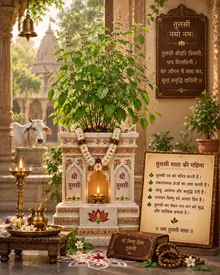
Reading details
जय जय तुलसी भगवती, सत्यवती सुखदानी।
नमो नमो हरि प्रेयसी, श्री वृन्दा गुन खानी॥
Jai jai Tulsi Bhagwati, Satyavati sukhdani. Namo namo Hari preyasi, Shri Vrinda gun khani.
श्री हरि शीश बिरजिनी, देहु अमर वर अम्ब।
जनहित हे वृन्दावनी, अब न करहु विलम्ब॥
Shri Hari sheesh birajini, dehu amar var amb. Janhit he Vrindavani, ab na karahu vilamb.
धन्य धन्य श्री तुलसी माता।
महिमा अगम सदा श्रुति गाता॥
Dhanya dhanya Shri Tulsi mata. Mahima agam sada shruti gata.
हरि के प्राणहु से तुम प्यारी।
हरीहीँ हेतु कीन्हो तप भारी॥
Hari ke pranahu se tum pyari. Harihin hetu keenho tap bhari.
जब प्रसन्न है दर्शन दीन्ह्यो।
तब कर जोरी विनय उस कीन्ह्यो॥
Jab prasann hai darshan deenhyo. Tab kar jori vinaya us keenho.
हे भगवन्त कन्त मम होहू।
दीन जानी जनि छाडाहू छोहु॥
He bhagwant kant mam hohu. Deen jani jani chhadahu chhohu.
सुनी लक्ष्मी तुलसी की बानी।
दीन्हो श्राप कध पर आनी॥
Suni Lakshmi Tulsi ki bani. Deenho shrap kadh par aani.
उस अयोग्य वर मांगन हारी।
होहू विटप तुम जड़ तनु धारी॥
Us ayogya var maangan haari. Hohu vitap tum jad tanu dhari.
सुनी तुलसी हीँ श्रप्यो तेहिं ठामा।
करहु वास तुहू नीचन धामा॥
Suni Tulsi hin shrapyo tehin thama. Karahu vaas tuhu neechan dhama.
दियो वचन हरि तब तत्काला।
सुनहु सुमुखी जनि होहू बिहाला॥
Diyo vachan Hari tab tatkala. Sunahu sumukhi jani hohu bihala.
समय पाई व्हौ रौ पाती तोरा।
पुजिहौ आस वचन सत मोरा॥
Samay paai vhau rau paati tora. Pujihau aas vachan sat mora.
तब गोकुल मह गोप सुदामा।
तासु भई तुलसी तू बामा॥
Tab Gokul mah gop Sudama. Tasu bhai Tulsi tu bama.
कृष्ण रास लीला के माही।
राधे शक्यो प्रेम लखी नाही॥
Krishna raas leela ke mahi. Radhe shakyo prem lakhi nahi.
दियो श्राप तुलसिह तत्काला।
नर लोकही तुम जन्महु बाला॥
Diyo shrap Tulsihi tatkala. Nar lokahi tum janmahu bala.
यो गोप वह दानव राजा।
शङ्ख चुड नामक शिर ताजा॥
Yo gop vah danav raja. Shankh chud namak shir taja.
तुलसी भई तासु की नारी।
परम सती गुण रूप अगारी॥
Tulsi bhai tasu ki naari. Param sati gun roop agari.
अस द्वै कल्प बीत जब गयऊ।
कल्प तृतीय जन्म तब भयऊ॥
As dwai kalp beet jab gayoo. Kalp tritiya janm tab bhayoo.
वृन्दा नाम भयो तुलसी को।
असुर जलन्धर नाम पति को॥
Vrinda naam bhayo Tulsi ko. Asur Jalandhar naam pati ko.
करि अति द्वन्द अतुल बलधामा।
लीन्हा शंकर से संग्राम॥
Kari ati dwand atul baldhama. Leenha Shankar se sangram.
जब निज सैन्य सहित शिव हारे।
मरही न तब हर हरिही पुकारे॥
Jab nij sainya sahit Shiv hare. Marahi na tab Har Harihi pukare.
पतिव्रता वृन्दा थी नारी।
कोऊ न सके पतिहि संहारी॥
Pativrata Vrinda thi naari. Koo na sake pati sanhari.
तब जलन्धर ही भेष बनाई।
वृन्दा ढिग हरि पहुच्यो जाई॥
Tab Jalandhar hi bhesh banai. Vrinda dhig Hari pahuchyo jaai.
शिव हित लही करि कपट प्रसंगा।
कियो सतीत्व धर्म तोही भंगा॥
Shiv hit lahi kari kapat prasanga. Kiyo satitva dharma tohi bhanga.
भयो जलन्धर कर संहारा।
सुनी उर शोक उपारा॥
Bhayo Jalandhar kar sanhara. Suni ur shok upara.
तिही क्षण दियो कपट हरि टारी।
लखी वृन्दा दुःख गिरा उचारी॥
Tihi kshan diyo kapat Hari taari. Lakhi Vrinda dukh gira uchari.
जलन्धर जस हत्यो अभीता।
सोई रावन तस हरिही सीता॥
Jalandhar jas hatyo abheeta. Soi Ravan tas Harihi Sita.
अस प्रस्तर सम ह्रदय तुम्हारा।
धर्म खण्डी मम पतिहि संहारा॥
As prastar sam hriday tumhara. Dharma khandi mam pati sanhara.
यही कारण लही श्राप हमारा।
होवे तनु पाषाण तुम्हारा॥
Yahi karan lahi shrap hamara. Hove tanu pashan tumhara.
सुनी हरि तुरतहि वचन उचारे।
दियो श्राप बिना विचारे॥
Suni Hari turatahi vachan uchare. Diyo shrap bina vichare.
लख्यो न निज करतूती पति को।
छलन चह्यो जब पारवती को॥
Lakhyo na nij kartooti pati ko. Chhalan chahyo jab Parvati ko.
जड़मति तुहु अस हो जड़रूपा।
जग मह तुलसी विटप अनूपा॥
Jadmati tuhu as ho jadroopa. Jag mah Tulsi vitap anoopa.
धग्व रूप हम शालिग्रामा।
नदी गण्डकी बीच ललामा॥
Dhagva roop ham Shaligrama. Nadi Gandaki beech lalama.
जो तुलसी दल हमही चढ़ इहैं।
सब सुख भोगी परम पद पईहै॥
Jo Tulsi dal hamahi chadh ihain. Sab sukh bhogi param pad paihai.
बिनु तुलसी हरि जलत शरीरा।
अतिशय उठत शीश उर पीरा॥
Binu Tulsi Hari jalat sharira. Atishay uthat sheesh ur peera.
जो तुलसी दल हरि शिर धारत।
सो सहस्त्र घट अमृत डारत॥
Jo Tulsi dal Hari shir dharat. So sahastra ghat amrit darat.
तुलसी हरि मन रञ्जनी हारी।
रोग दोष दुःख भंजनी हारी॥
Tulsi Hari man ranjani hari. Rog dosh dukh bhanjani hari.
प्रेम सहित हरि भजन निरन्तर।
तुलसी राधा में नाही अन्तर॥
Prem sahit Hari bhajan nirantar. Tulsi Radha mein nahi antar.
व्यन्जन हो छप्पनहु प्रकारा।
बिनु तुलसी दल न हरीहि प्यारा॥
Vyanjan ho chhappanahu prakara. Binu Tulsi dal na Harihi pyara.
सकल तीर्थ तुलसी तरु छाही।
लहत मुक्ति जन संशय नाही॥
Sakal tirth Tulsi taru chhahi. Lahat mukti jan sanshay nahi.
कवि सुन्दर इक हरि गुण गावत।
तुलसिहि निकट सहसगुण पावत॥
Kavi sundar ik Hari gun gavat. Tulsihi nikat sahasgun pavat.
बसत निकट दुर्बासा धामा।
जो प्रयास ते पूर्व ललामा॥
Basat nikat Durbasa dhama. Jo prayas te poorv lalama.
पाठ करहि जो नित नर नारी।
होही सुख भाषहि त्रिपुरारी॥
Path karahi jo nit nar nari. Hohi sukh bhashahi Tripurari.
तुलसी चालीसा पढ़ही, तुलसी तरु गृह धारी।
दीपदान करि पुत्र फल, पावही बंध्यहु नारी॥
Tulsi chalisa padhahi, Tulsi taru grih dhari. Deepdaan kari putra phal, pavahi bandhyahu naari.
सकल दुःख दरिद्र हरि, हार ह्वै परम प्रसन्न।
आशिय धन जन लड़हि, गृह बसही पूर्णा अत्र॥
Sakal dukh daridra hari, haar hvai param prasann. Aashiya dhan jan ladhahi, grih basahi poorna atra.
लाही अभिमत फल जगत, मह लाही पूर्ण सब काम।
जेई दल अर्पही तुलसी तंह, सहस बसही हरीराम॥
Laahi abhimat phal jagat, mah laahi poorna sab kaam. Jei dal arpahi Tulsi tanh, sahas basahi Harirama.
तुलसी महिमा नाम लख, तुलसी सूत सुखराम।
मानस चालीस रच्यो, जग महं तुलसीदास॥
Tulsi mahima naam lakh, Tulsi soot sukhram. Maanas chalees rachyo, jag mahan Tulsidas.
For a vrat, some devotees read it several times in one sitting: 11, 21, or 108. Save your reading count with this counter.
How to Read Shri Tulsi Chalisa
Read this Chalisa in the evening near the Tulsi plant with a lamp lit, especially during the month of Kartik and on Devutthana Ekadashi. Repeat all the closing dohas at the end of the full reading.
About Shri Tulsi Chalisa
The Shri Tulsi Chalisa is a devotional hymn to Tulsi Mata, describing her glory along with the Puranic legend of Vrinda and Jalandhar, tied to the origin of Tulsi and the Shaligram. The composition opens with two dohas, continues through forty chaupais, and closes with four dohas.
This page presents the full text in clean Devanagari, with a simple meaning for every verse. Text size can be adjusted, and the full reading can also be printed.
The closing doha of the Shri Tulsi Chalisa names its composer as 'Tulsidas', but this appears to be a different person from Goswami Tulsidas, author of the Ramcharitmanas, the language and style here don't match that great work, and no solid historical evidence links the two. It is therefore considered a traditional composition by an unknown or different author, who may have adopted this name simply out of devotion to Tulsi Mata. It recounts the Puranic legend of Vrinda and Jalandhar, tied to the origin of Tulsi and the Shaligram.
Benefits of Reading the Tulsi Chalisa
It is believed that regular recitation and worship of Tulsi removes illness, faults, and sorrow, replaces poverty with prosperity, and fulfils one's wishes; the closing dohas also state that a childless woman is blessed with the joy of a child.
Frequently asked questions
Who composed the Shri Tulsi Chalisa?
The closing doha names its composer as 'Tulsidas', but this appears to be a different person from Goswami Tulsidas, author of the Ramcharitmanas, so it's considered a traditional composition by an unknown or different author.
How many chaupais does it have?
It has two opening dohas, forty chaupais, and four closing dohas.
What is the best time to read it?
Every evening near the Tulsi plant with a lamp lit, especially during Kartik month and on Devutthana Ekadashi, is considered ideal.
Is it necessary to know the meaning?
Not necessary, but reading it with the meaning makes the devotion clearer. This page includes a simple meaning alongside every verse.
Why does the Chalisa include the story of Vrinda and Jalandhar?
As the verses describe, this story is the Puranic explanation for the origin of Tulsi and the Shaligram, it is believed that Vrinda's curse is what led Hari to take the form of stone (Shaligram) and Tulsi to take the form of the plant.
What are the benefits of reciting the Tulsi Chalisa?
It is believed that regular recitation and worship of Tulsi removes illness, faults, and sorrow, replaces poverty with prosperity, and fulfils one's wishes; the closing dohas also state that a childless woman is blessed with the joy of a child.