 Astha SangrahASTHA SANGRAHhttps://asthasangrah.com
Pongal
Pongal is Tamil Nadu's principal harvest festival, celebrated over four days from the first day of the Tamil Thai month, marking the Sun's entry into Capricorn.
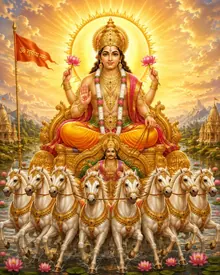
Thai Pongal, the main day, falls on the same solar date as Makar Sankranti in North India, so it too lands on a nearly fixed Gregorian date each year. It is preceded by Bhogi and followed by Mattu Pongal and Kaanum Pongal on the next two days.
Significance of Pongal
Pongal is celebrated to mark the Sun's entry into Capricorn and the start of the Uttarayan period, just as Makar Sankranti is observed in North India. It is a harvest festival, celebrated to express gratitude to the Sun god on the occasion of the new paddy harvest.
The celebration spans four days, the first, 'Bhogi', when old and unused belongings are burnt in a bonfire to make way for the new; the second, 'Thai Pongal', the main day; the third, 'Mattu Pongal', dedicated to worshipping cattle, especially bulls; and the fourth, 'Kaanum Pongal', a day for meeting family and friends.
On Thai Pongal, gratitude is also expressed to Indra Dev, alongside Surya, for the rains that made a good harvest possible. The festival is celebrated mainly in Tamil Nadu, and also with great enthusiasm by Tamil communities settled around the world.
How Pongal Is Celebrated
On Bhogi, homes are cleaned and old, unused belongings are burnt in a bonfire, symbolizing a fresh start in life.
On the morning of Thai Pongal, the dish called 'Pongal' is boiled in a new clay pot in the courtyard, made of new rice, jaggery, and milk. The milk boiling over and spilling from the pot is considered auspicious, and everyone present shouts 'Pongalo Pongal' in joy.
On Mattu Pongal, bulls and cows are bathed, their horns painted, decorated with garlands, and fed a special meal. In some regions, the traditional bull-taming competition called 'Jallikattu' is also held. On Kaanum Pongal, families eat together and visit one another's homes.
Pongal Puja Vidhi
On Bhogi, clean the home and burn old belongings in a bonfire. On the morning of Thai Pongal, boil the Pongal dish of rice, jaggery, and milk in a new clay pot and offer it to Surya Dev. On Mattu Pongal, worship the cattle, and on Kaanum Pongal, share a meal with family.
About Pongal
Pongal is Tamil Nadu's principal four-day harvest festival, celebrated to mark the Sun's entry into Capricorn. This page covers Pongal's significance, its four days, Bhogi, Thai Pongal, Mattu Pongal, and Kaanum Pongal, and the tradition of boiling the Pongal dish.
The information on this page is presented with easy-to-read sizing and print support.
Frequently Asked Questions
When is Pongal observed?
Pongal is observed around 14 or 15 January every year, over four days starting from the first day of the Tamil Thai month.
What is the relationship between Pongal and Makar Sankranti?
Thai Pongal, Pongal's main day, falls on the same solar date as Makar Sankranti in North India, both celebrate the Sun's entry into Capricorn, with only the regional name and customs differing.
What are the four days of Pongal?
The four days of Pongal are Bhogi, Thai Pongal (the main day), Mattu Pongal (cattle worship), and Kaanum Pongal (a day for family gatherings).
Why is the milk boiling over the Pongal pot considered auspicious?
Milk or the dish boiling over and spilling from the pot is considered an auspicious sign of prosperity and abundance, and it is at this moment that those present shout 'Pongalo Pongal' in joy.