 Astha SangrahASTHA SANGRAHhttps://asthasangrah.com
Shri Shravana Putrada Ekadashi Vrat Katha
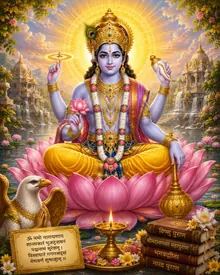
The Shravana Putrada Ekadashi Vrat Katha is the story of Putrada Ekadashi in Shravana's bright fortnight, in which Lord Krishna tells Yudhishthira how the people of Mahijit, the righteous but childless king of Mahishmati, kept this vow at the sage Lomasha's word and gave its merit to their king, who was then blessed with a son.
Chapter 1 · Mahijit, the Childless King
Yudhishthira said, 'Madhusudana, out of your grace tell me the name of the Ekadashi of Shravana's bright fortnight.' Shri Krishna said, 'O king, listen closely to this excellent, sin-removing story, by merely hearing which one gains the fruit of the Vajapeya sacrifice. At the start of the Dvapara age, in the city of Mahishmati, a king named Mahijit ruled his kingdom. Having no son, his kingdom brought him no joy, for one without a son has no happiness in this world or the next. Much time passed in worry over a son, but the king did not gain the son who gives people every joy. Seeing himself grow old, the king sank into worry. Then he went among his people and said: People, in this life I have committed no sin. I never put wealth gained by injustice into my treasury. I never took the wealth of brahmins or the property of the gods. I never seized what others left in my keeping, which is a great sin. I cared for my people as for my sons and won the earth by dharma. Even those like brothers and sons I punished when they turned wicked; the good I always honoured, and I hated no one. Best of brahmins, I walk the path of dharma in this way, so why has no son been born in my house? Consider this.'
'Hearing this, the brahmins, with the people and the priests, took counsel for the king's good and went into the deep forest. Looking here and there at hermitages where sages dwelt, seeking the king's good, they saw a great sage practising fierce austerity, dependent on none, free of illness, without food, self-mastered and with anger conquered. He was the great soul Lomasha, who knows the essence of dharma, is skilled in every shastra, long-lived and equal to Brahma. At the passing of each kalpa one hair (loma) falls from his body, which is why he is called Lomasha, and he is a great sage who knows the three times. Seeing him, they were all glad, went to him and bowed as was fitting. Bowed in humility, they said to one another: by our good fortune alone have we found this great sage. Seeing them so, the best of sages spoke.'
Chapter 2 · The Sage Lomasha and the Fault of a Past Life
Lomasha said, 'Why have you come here? Tell me the reason. Why are you glad to see me, and why do you praise me? I will surely do whatever is for your good, for people like me are born only to help others.' The people said, 'Hear us; we will tell you why we have come. We have come to you to clear our doubt. After Brahma there is none greater than you, so we have come to you on our errand. Brahmin, the king named Mahijit is now without a son. We are his people, whom he has cared for as his own sons. Seeing him without a son and grieving at his grief, we came here resolved to practise austerity. Best of brahmins, by the king's good fortune we have seen you. By the mere sight of the great, people's tasks are fulfilled. Sage, tell us the way by which the king may have a son.' Hearing them, the sage sat in meditation for a muhurta, and knowing the king's former birth, he spoke.
Lomasha said, 'In his former birth he was a poor and pitiless merchant who went from village to village about his trade. On the tenth day of Jyeshtha's bright fortnight, when the midday sun stood overhead, he came to a pool at the edge of a village. Seeing a step-well full of water, he set his mind on drinking. Just then a cow came there with her calf. Tormented by thirst and suffering from the heat, she began to drink from it. He drove the drinking cow away and drank the water himself. Through that sinful deed the king is without a son, and through the merit of some other birth he gained a kingdom free of enemies.' The people said, 'Sage, it is heard in the Puranas that merit wipes out sin. Tell us a merit by which that sin may be destroyed and, by your grace, the king may have a son.'
Chapter 3 · The Putrada Vow, the Son's Birth and Pavitraropana
Lomasha said, 'In the bright fortnight of Shravana the Ekadashi renowned as Putrada gives what one desires. People, keep its vow.' Hearing this, they bowed to the sage, returned to the city, and kept that vow by its rite and rules, with the night vigil. The people gave its spotless merit to the king. As soon as the merit was given, the queen conceived a fine child, and when her time came she gave birth to a radiant son.
'In the bright fortnight of Shravana, when the sun is in Cancer, on the Dwadashi the rite is to offer a pavitra, a sacred thread, to Lord Vasudeva. Make the pavitra from threads of gold, silver, copper, linen or silk, or from auspicious threads of kusha, kasha grass and cotton spun by a brahmin woman. After bathing, purify a threefold thread twisted threefold again. On the day before, for as long as it takes to milk a cow, consecrate the pavitra, salute the brahmins and bow at the teacher's feet. Then keep vigil with songs and auspicious sounds. Brahmins, kshatriyas, vaishyas, women and shudras, each abiding in their own dharma, should all offer the pavitra with devotion. Then give a pavitra to the teacher by rite.'
'Worship the brahmins and Vaishnavas with fragrance, flowers and the like. A twice-born should offer the pavitra to Vishnu with the mantra "ato deva", and a shudra with the root mantra, to Shiva as to Vishnu. In this world, an ocean of sorrow, those who want enjoyment and liberation should perform Pavitraropana every year. For a Vaishnava who does not perform Pavitraropana by rite, the worship of the whole year bears no fruit. Hearing its glory, a person is freed from sin, gains the joy of a son in this world and goes to heaven in the next.'
How to Read Shri Shravana Putrada Ekadashi Vrat Katha
On Shravana Shukla Ekadashi, bathe in the morning, take the vow of fasting, worship Lord Vishnu and keep vigil at night, as the people did in the katha. On Dwadashi offer Lord Vasudeva a pavitra made of threefold thread of silk, cotton or kusha, honour the brahmins and your teacher, and break the fast within the parana muhurat.
About Shri Shravana Putrada Ekadashi Vrat Katha
The Shravana Putrada Ekadashi Vrat Katha is told in three chapters. In the first, Mahijit, the righteous king of Mahishmati, asks his people why he has no son, and the people find the sage Lomasha in the forest. In the second, Lomasha reveals that in a former birth as a merchant the king drove a thirsty cow from the water and drank it himself. In the third, the people keep the Putrada Ekadashi vow and give its merit to the king, the queen bears a son, and then comes the rite of Pavitraropana on the Dwadashi.
This vow is kept on the Ekadashi of Shravana's bright fortnight. There is another Putrada Ekadashi in Pausha's bright fortnight, whose story is that of King Suketuman. In North India the Shravana Putrada fast is especially popular among those praying for a child.
The Shravana Putrada Ekadashi Vrat Katha has no named author. It is the fifty-fifth chapter of the Uttara Khanda of the Padma Purana, in which Lord Krishna himself tells Yudhishthira the story of King Mahijit and the sage Lomasha and the rite of Pavitraropana. The text given here is a verse-by-verse translation of that chapter's 44 Sanskrit verses.
Benefits of the Shravana Putrada Ekadashi Vrat Katha
According to the katha, Putrada Ekadashi gives what one desires, and merely hearing of it brings the fruit of the Vajapeya sacrifice; its merit can be given to another for their good, as the people did for their king; and one who hears its glory gains the joy of a son in this world and heaven in the next.
Frequently asked questions
How many chapters does the Shravana Putrada Ekadashi Vrat Katha have?
It has three chapters, based on the 44 verses of the fifty-fifth chapter of the Padma Purana's Uttara Khanda.
Why was King Mahijit without a son?
Lomasha, after meditating, revealed that in a former birth the king was a pitiless merchant. On the afternoon of Jyeshtha Shukla Dashami, at a step-well, he drove away a thirsty cow and her calf as they drank and drank the water himself. Through that sin he was without a son in this life.
What is the difference between the Shravana and Pausha Putrada Ekadashis?
Both are called Putrada and both are kept for the blessing of a child, but their stories differ. The Shravana Shukla Putrada tells of King Mahijit and the sage Lomasha, and the Pausha Shukla Putrada tells of King Suketuman of Bhadravati and the Vishvedevas.
What is Pavitraropana?
According to the katha, on Shravana Shukla Dwadashi, when the sun is in Cancer, Lord Vasudeva is offered a pavitra made of threefold thread of silk, cotton, kusha and the like. It is said that for a Vaishnava who does not do this every year, the worship of the whole year bears no fruit.