 Astha SangrahASTHA SANGRAHhttps://asthasangrah.com
Narasimha Jayanti
Narasimha Jayanti is observed on Vaishakha Shukla Chaturdashi, the day on which Lord Vishnu took the half-man, half-lion form to protect his devotee Prahlad.
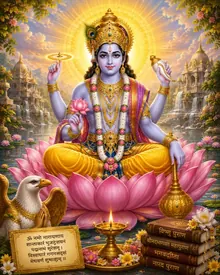
The puja is generally performed in the evening, since Lord Narasimha appeared at twilight, the junction of day and night. Check a local panchang for the exact muhurat.
Significance of Narasimha Jayanti
The demon king Hiranyakashyap performed severe penance and obtained a boon from Lord Brahma that he could not be killed by man or beast, by day or by night, inside a dwelling or outside it, on the ground or in the sky, nor by any weapon, and with this boon, he came to believe himself invincible.
Hiranyakashyap's son Prahlad was a devoted follower of Lord Vishnu from childhood, which enraged his father, who subjected him to many tortures, yet Prahlad's devotion remained unshaken. Finally, the furious Hiranyakashyap demanded to know where his Vishnu was, and Prahlad replied that he was present in every particle, even in that very pillar.
In fury, Hiranyakashyap struck the pillar, and at that very moment, Lord Vishnu appeared from it as Narasimha (half-man, half-lion), at twilight (neither day nor night), seated on the threshold of the doorway (neither inside the dwelling nor outside it), placing him on his thighs (neither on the ground nor in the sky), and slaying him with his claws (not with any weapon), thus honoring every condition of the boon while still ending his tyranny.
How Narasimha Jayanti Is Celebrated
Devotees observe a fast from morning until evening, and in the evening, worship an image or idol of Lord Narasimha, reciting the Narasimha Stotra and Narasimha Kavach, which are believed to destroy fear and hardship.
Temples organize special abhishekam and aarti, and the legend is recited in remembrance of devotee Prahlad's devotion and the Lord's protective power. This festival is celebrated with special grandeur in South India, especially in Andhra Pradesh and Telangana.
The fast is broken after the evening puja, and the prasad offered to Lord Narasimha is shared with the family. This day is observed especially to seek freedom from fear, adversaries, and hardship.
Narasimha Jayanti Puja Vidhi
Bathe in the morning and observe a fast through the day. In the evening, worship an image or idol of Lord Narasimha, and recite the Narasimha Stotra and Narasimha Kavach. After the puja, perform the aarti and break the fast with the prasad.
About Narasimha Jayanti
Narasimha Jayanti is observed on Vaishakha Shukla Chaturdashi as the appearance day of Lord Vishnu's Narasimha avatar. This page covers this day's significance, the legend of devotee Prahlad and Hiranyakashyap, and the method of worship.
The information on this page is presented with easy-to-read sizing and print support.
Frequently Asked Questions
When is Narasimha Jayanti observed?
Narasimha Jayanti is observed every year on Vaishakha Shukla Chaturdashi.
How did Lord Narasimha slay Hiranyakashyap?
Hiranyakashyap had a boon that he could not be killed by man or beast, by day or night, inside a dwelling or outside it, on the ground or in the sky, or by any weapon, Lord Narasimha, in his half-man, half-lion form, at twilight, on the threshold, placing him on his thighs, and slaying him with his claws, honored every condition of the boon while still ending his tyranny.
Where does Narasimha fall in the Dashavatara sequence?
The Narasimha avatar is the fourth of Lord Vishnu's ten avatars (Dashavatara), coming after the Varaha avatar and before the Vamana avatar.
Why is Narasimha Jayanti's puja performed in the evening?
Lord Narasimha appeared at twilight, the junction of day and night, which is why his puja is traditionally performed in the evening as well.