 Astha SangrahASTHA SANGRAHhttps://asthasangrah.com
Gudi Padwa (Ugadi)
Gudi Padwa is the new year festival of Maharashtra and Goa, celebrated on Chaitra Shukla Pratipada, and observed as Ugadi in Andhra Pradesh, Telangana, and Karnataka.
This same tithi is also Chaitra Navratri's Pratipada (Ghatasthapana), and this day marks the start of the Hindu new year, both the Vikram Samvat and the Shalivahan Shaka calendar. Check a local panchang for the exact muhurat.
Significance of Gudi Padwa (Ugadi)
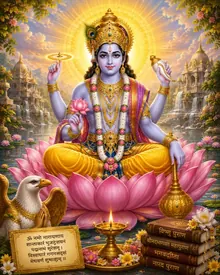
It is believed that Lord Brahma began the creation of the universe on this very day, so Chaitra Shukla Pratipada is regarded as creation's first day. The Hindu panchang's new year, the Chaitra month and the Vikram Samvat, also begins on this same tithi.
In Maharashtra and Goa, this day is called 'Gudi Padwa', where the 'Gudi' symbolizes a victory flag, it is said that King Shalivahan achieved victory over his enemies on this very day, and his subjects welcomed him by decorating a Gudi outside every home, which is also why the Shalivahan Shaka calendar begins on this same day.
In Andhra Pradesh, Telangana, and Karnataka, this day is called 'Ugadi', formed from the Sanskrit words 'yuga' (era) and 'adi' (beginning), meaning the start of a new era. This same tithi is also Chaitra Navratri's Pratipada, so in many homes, Ghatasthapana is also performed on this day.
How Gudi Padwa (Ugadi) Is Celebrated
In Maharashtra and Goa, a long bamboo staff is decorated with a silk cloth, neem leaves, a garland of mango leaves, a flower garland, and an upturned copper or silver pot, and this 'Gudi' is hoisted outside the main door and worshipped.
On this day, a prasad made of neem leaves, jaggery, and other ingredients is eaten, symbolizing the acceptance of both joy and sorrow in life with equanimity. In Andhra-Karnataka, this same idea is expressed through 'Ugadi Pachadi', a dish blending all six tastes, neem, jaggery, tamarind, raw mango, and chili.
Homes are decorated with rangoli, new clothes are worn, and the tradition of Panchang-Shravan is observed, in which the new year's planetary and seasonal predictions are read out. In many places, grand processions are also taken out.
Gudi Padwa (Ugadi) Puja Vidhi
Bathe in the morning and wear new clothes. At the home's main door, decorate a bamboo staff with a silk cloth, neem leaves, and a flower garland, topped with an upturned pot, to make the Gudi, and worship it. Eat a prasad made of neem leaves and jaggery, and listen to the reading of the new year's panchang.
About Gudi Padwa (Ugadi)
Gudi Padwa is the new year festival of Maharashtra-Goa, celebrated on Chaitra Shukla Pratipada, and observed as Ugadi in Andhra-Telangana-Karnataka. This page covers the festival's significance, the tradition of decorating the Gudi, and the start of the Shalivahan Shaka calendar.
The information on this page is presented with easy-to-read sizing and print support.
Frequently Asked Questions
When is Gudi Padwa observed?
Gudi Padwa is observed every year on Chaitra Shukla Pratipada, the same tithi that is also Chaitra Navratri's Pratipada.
What is the difference between Gudi Padwa and Ugadi?
Both are celebrated on the same tithi and the same occasion, it is called Gudi Padwa in Maharashtra and Goa, while it is observed as Ugadi in Andhra Pradesh, Telangana, and Karnataka.
What is a Gudi?
A Gudi is a victory flag made by tying a silk cloth, neem leaves, a flower garland, and an upturned copper or silver pot onto a bamboo staff, which is hoisted and worshipped at the home's main door.
What is Ugadi Pachadi?
Ugadi Pachadi is a special dish made from a mix of neem, jaggery, tamarind, raw mango, and chili, symbolizing the six tastes of life, sweet, bitter, sour, salty, spicy, and astringent.