 Astha SangrahASTHA SANGRAHhttps://asthasangrah.com
Gangaur
Gangaur culminates on Chaitra Shukla Tritiya, a festival that begins the day after Holi and runs for about sixteen to eighteen days, observed in remembrance of the union of Mata Gauri and Lord Shiva.
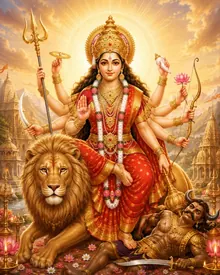
Gangaur's observance begins the day after Holi (Chaitra Krishna Pratipada) and concludes on Chaitra Shukla Tritiya, a few days after Gudi Padwa and the start of Chaitra Navratri. Check a local panchang for the exact date.
Significance of Gangaur
The name Gangaur is formed from 'Gan' (a name of Lord Shiva) and 'Gaur' (a form of Goddess Parvati). It is believed that Goddess Parvati, consumed in Holi's fire, was reborn, and performed severe penance to reunite with Lord Shiva, after which the two were united once more, Gangaur is celebrated as the festival of this very reunion.
Unmarried girls observe this vow wishing for a suitable groom, and married women observe it wishing for their husband's long life and a happy married life, regarding Mata Gauri as their ideal and praying for an unbroken marital bond just as hers was.
This festival is celebrated with the greatest grandeur in Rajasthan, especially in Jaipur and Udaipur, where the Gangaur procession is taken out following royal tradition, and it is regarded as a major part of Rajasthan's cultural identity.
How Gangaur Is Celebrated
From the day after Holi, women and girls make clay idols of Gangaur (Mata Gauri) and Isar (Lord Shiva), decorating them daily with new clothes, adornments, and flowers, and worshipping them. Special Gangaur songs are also sung every day during this period.
In the final days, the richly adorned idols of Gangaur and Isar are taken through the town in a grand procession, and finally immersed in a stepwell or water body. Unmarried girls carry small clay pots (ghudlia) with lit lamps from house to house.
Jaipur's Gangaur procession is especially renowned, where, following royal family tradition, the Gangaur idol is decorated on an elephant and palanquin and taken from the City Palace through the city's main routes, drawing tourists from across India and abroad.
Gangaur Puja Vidhi
From the day after Holi, make clay idols of Gangaur and Isar, worshipping them daily with adornments and flowers. Sing Gangaur songs. On the final days, take the idols through town in a procession and immerse them in a water body.
About Gangaur
Gangaur culminates on Chaitra Shukla Tritiya, observed in remembrance of the union of Mata Gauri and Lord Shiva, and celebrated with the greatest grandeur in Rajasthan. This page covers the festival's significance, the tradition of worshipping clay idols, and the procession.
The information on this page is presented with easy-to-read sizing and print support.
Frequently Asked Questions
When is Gangaur observed?
Gangaur begins the day after Holi and culminates on Chaitra Shukla Tritiya, making it a festival of about sixteen to eighteen days.
Why is Gangaur celebrated?
It is celebrated in remembrance of the reunion of Mata Gauri and Lord Shiva, unmarried girls observe it wishing for a suitable groom, while married women observe it for their husband's long life and a happy married life.
Where is Gangaur celebrated most grandly?
This festival is celebrated most grandly in Rajasthan, especially in Jaipur and Udaipur, where a grand Gangaur procession is taken out.
What is a Ghudlia?
A ghudlia is a perforated clay pot in which a lamp is lit, carried by unmarried girls from house to house during the days of Gangaur, while singing special songs.