
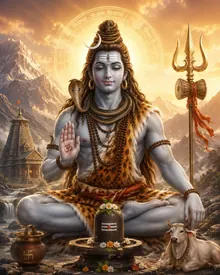
The Hartalika Teej fast is considered stricter than Hariyali Teej, and it usually falls one day before Ganesh Chaturthi. In 2026, due to a tithi coincidence, Hartalika Teej and Ganesh Chaturthi fall on the same day (14 September). In a year when Teej coincides with the Hasta Nakshatra, it is considered especially meritorious.
Significance of Hartalika Teej
The word 'Hartalika' combines 'harat' (to abduct) and 'alika' (a female friend). According to the legend, Maa Parvati's friend spirited her away into a dense forest to save her from a marriage her father, King Himalaya, had arranged with Lord Vishnu, and it was there that she performed severe penance to win Lord Shiva as her husband. The vow takes its name, 'Hartalika Teej', from this very episode.
It is believed that Maa Parvati worshipped Lord Shiva across 107 lifetimes, and in her 108th life, on this very Bhadrapada Shukla Tritiya, Lord Shiva was pleased and accepted her as his wife. Lord Shiva himself told Maa Parvati that this was the most secret and excellent of vows, its full story is recounted in the Hartalika Teej Vrat Katha.
Married women observe this rigorous waterless fast for their husband's long life and a happy married life, while unmarried girls keep it seeking a husband as virtuous as Lord Shiva. The vow is stricter than Hariyali Teej and is usually observed the day before Ganesh Chaturthi.
How Hartalika Teej Is Celebrated
The waterless fast begins on the evening of Dwitiya itself and continues through the whole of Tritiya tithi. Women perform the solah shringar and shape idols of Lord Shiva and Maa Parvati from sand or clay to worship with full ritual.
A night-long vigil is kept with devotional singing, and the Hartalika Teej Vrat Katha is recited, narrating the full account of Maa Parvati's penance.
The next day, on Chaturthi tithi, the installed idol is ceremonially immersed, and the fast is broken only after this concluding worship.
Hartalika Teej Puja Vidhi
Begin the waterless fast on Dwitiya evening. On Tritiya, perform the solah shringar, shape idols of Lord Shiva and Maa Parvati from sand or clay, and worship them with full ritual. Keep a night-long vigil and listen to the Hartalika Teej Vrat Katha. The next day, on Chaturthi, break the fast after immersing the idols and completing the worship.
About Hartalika Teej
Hartalika Teej is the rigorous waterless fast observed on Bhadrapada Shukla Tritiya, commemorating Maa Parvati's penance to win Lord Shiva as her husband. This page covers the festival's significance, the origin of the name 'Hartalika', and the vrat vidhi.
The full story of Maa Parvati's penance is available on the Hartalika Teej Vrat Katha page, and see the separate page for Hariyali Teej, which falls earlier in the Shravan month. The information on this page is presented with easy-to-read sizing and print support.
Frequently Asked Questions
When is Hartalika Teej observed?
Hartalika Teej is observed every year on the Tritiya tithi of the Bhadrapada Shukla Paksha, usually falling one day before Ganesh Chaturthi.
What does the name 'Hartalika' mean?
The word 'Hartalika' combines 'harat' (to abduct) and 'alika' (a female friend), referring to the legend of Maa Parvati's friend taking her into the forest.
Can water be consumed during the Hartalika Teej fast?
No, this is traditionally a waterless fast, beginning on Dwitiya evening and continuing through Tritiya, broken only on Chaturthi after the immersion and worship are complete.
What does the Hartalika Teej Vrat Katha describe?
It describes the full story of Maa Parvati's penance across 107 lifetimes and Lord Shiva accepting her as his wife in her 108th life, as narrated by Lord Shiva himself to Maa Parvati.