
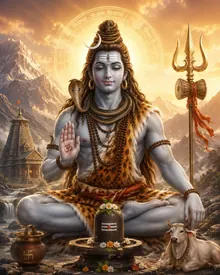
Hariyali Teej is also called 'Shravani Teej' or 'Sindhara Teej', and in most traditions it is a more joyous, less austere observance than Hartalika Teej, with a considerably lighter fast.
Significance of Hariyali Teej
It is believed that Maa Parvati performed severe penance across 107 lifetimes seeking Lord Shiva as her husband, and in her 108th life, on this very Shravan Shukla Tritiya, Lord Shiva accepted her as his wife. Hariyali Teej is celebrated in remembrance of this reunion.
The festival falls in the Sawan month, when the monsoon covers the earth in greenery, which is why it is called 'Hariyali' (green) Teej. Married women observe the fast for the happiness and prosperity of their married life, while unmarried girls keep it seeking a husband like Shiva.
It is regarded as a gentler festival than Hartalika Teej, with adornment, swinging on decorated swings, and singing Sawan songs as its central traditions, rather than a strict waterless fast.
How Hariyali Teej Is Celebrated
Women wear green clothes and bangles and perform the full solah shringar (sixteen adornments), and apply mehndi on their hands. Traditional Sawan songs are sung while swinging on decorated swings hung from trees or at home.
An idol of Lord Shiva and Maa Parvati is set up at home and worshipped, and a phalahar fast is observed, its strictness depending on one's faith and capacity.
On a married daughter's first Hariyali Teej after her wedding, her parental family sends her a 'Sindhara' gift, containing sweets, clothes, and adornment items, which is why the festival is also called 'Sindhara Teej'.
Hariyali Teej Puja Vidhi
Bathe in the morning, wear green clothes, and perform the solah shringar. Set up an idol of Lord Shiva and Maa Parvati at home, worship them, and offer fruit and sweets as bhog. Observe a phalahar fast through the day and sing Sawan songs while swinging.
About Hariyali Teej
Hariyali Teej is observed on Shravan Shukla Tritiya, commemorating the reunion of Lord Shiva and Maa Parvati. This page covers the festival's significance, the tradition of adornment and swinging, and the Sindhara Teej custom.
A separate page is also available for Hartalika Teej, which falls later in the Bhadrapada month. The information on this page is presented with easy-to-read sizing and print support.
Frequently Asked Questions
When is Hariyali Teej observed?
Hariyali Teej is observed every year on the Tritiya tithi of the Shravan Shukla Paksha, usually falling in July–August.
What is the difference between Hariyali Teej and Hartalika Teej?
Hariyali Teej falls in the Shravan month and is a comparatively gentle festival, while Hartalika Teej falls in the Bhadrapada month and involves a strict waterless fast.
What is Sindhara?
Sindhara is a gift sent to a married daughter by her parental family on Hariyali Teej, containing sweets, clothes, and adornment items.
Why is swinging done on Hariyali Teej?
Swings are decorated at homes and on trees to enjoy the greenery and joy of the monsoon season, and women sing traditional songs while swinging on them.