 Astha SangrahASTHA SANGRAHhttps://asthasangrah.com
Anant Chaturdashi (Ganesh Visarjan)
Anant Chaturdashi is observed on Bhadrapada Shukla Chaturdashi, dedicated to the worship of Lord Vishnu's Ananta (infinite) form, and marking the conclusion of the ten-day Ganeshotsav with Ganesh Visarjan.
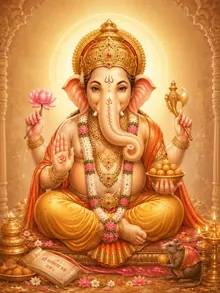
This tithi falls exactly ten days after Ganesh Chaturthi, which is why homes and public pandals observing the ten-day Ganeshotsav perform Ganesh Visarjan on this very day. Some families immerse the idol after just one and a half, five, or seven days instead, in which case their visarjan date will differ from this one.
Significance of Anant Chaturdashi (Ganesh Visarjan)
The legend of Anant Chaturdashi traces back to the Mahabharata era. According to the story, Maharishi Kaundinya's wife Sushila learned the 'Ananta Vrat' from a group of women in the forest and tied a fourteen-knotted silk thread on her arm, which brought prosperity back to their home. When Kaundinya doubted the thread's power and burned it, all their wealth was destroyed.
Wandering in remorse, Kaundinya was met by Lord Vishnu himself, who appeared to him in various forms and explained the glory of the Ananta Vrat, showing him the way to observe it again with true faith. This same vrat was performed by Yudhishthira during his exile, on Lord Krishna's counsel, after which the Pandavas regained their kingdom.
The fourteen knots of the Ananta Sutra are believed to represent the fourteen worlds (lokas). Men wear it on the right arm and women on the left, keeping it on until the following year's Anant Chaturdashi. On this same tithi, devotees observing the ten-day Ganeshotsav also immerse the idol of Lord Ganesh, symbolizing the cycle of creation and dissolution.
How Anant Chaturdashi (Ganesh Visarjan) Is Celebrated
Devotees bathe in the morning and worship Lord Vishnu's Ananta form, depicted reclining on Sheshnag or represented through a kalash, and tie the fourteen-knotted Ananta Sutra while listening to the legend of Kaundinya.
In homes and public pandals observing Ganeshotsav, the final aarti of the Ganesh idol is performed on this day, followed by a grand procession and immersion in a river, pond, or the sea. Amid chants of 'Ganpati Bappa Morya, Pudhchya Varshi Lavkar Ya' (come again soon next year), devotees pray for his return the following year.
In Maharashtra, especially in Mumbai and other cities, the day is observed with particular grandeur, with millions of devotees taking to the streets to bid farewell to Ganpati Bappa. For environmental reasons, immersion in artificial ponds is now encouraged in many places.
Anant Chaturdashi (Ganesh Visarjan) Puja Vidhi
Bathe in the morning and worship Lord Vishnu's Ananta form, tying the fourteen-knotted Ananta Sutra on your arm. Listen to or read the legend of Kaundinya. If a Ganesh idol is installed at home, perform the final aarti and bhog offering, then immerse it in water with proper ritual.
About Anant Chaturdashi (Ganesh Visarjan)
Anant Chaturdashi is observed on Bhadrapada Shukla Chaturdashi, known both for the worship of Lord Vishnu's Ananta form and for the conclusion of the ten-day Ganeshotsav. This page covers the legend of Kaundinya's Ananta Vrat, the significance of the Ananta Sutra, and the Ganesh Visarjan tradition.
See the separate page for Ganesh Chaturthi for more on the festival it concludes. The information on this page is presented with easy-to-read sizing and print support.
Frequently Asked Questions
When is Anant Chaturdashi observed?
Anant Chaturdashi is observed every year on Bhadrapada Shukla Chaturdashi, ten days after Ganesh Chaturthi.
What is the Ananta Sutra?
The Ananta Sutra is a fourteen-knotted silk thread, tied on the arm after worshipping Lord Vishnu's Ananta form, its fourteen knots representing the fourteen worlds.
Why is Ganesh Visarjan performed on Anant Chaturdashi?
For devotees observing the ten-day Ganeshotsav, the tenth day counted from Ganesh Chaturthi falls on Anant Chaturdashi itself, which is why the Ganesh idol is immersed on this day.
What does the legend of sage Kaundinya teach?
The legend teaches that doubt without faith brings ruin, and that a vow observed with a sincere heart, along with genuine repentance, reopens the path to prosperity and grace.