 Astha SangrahASTHA SANGRAHhttps://asthasangrah.com
Kedarnath Temple
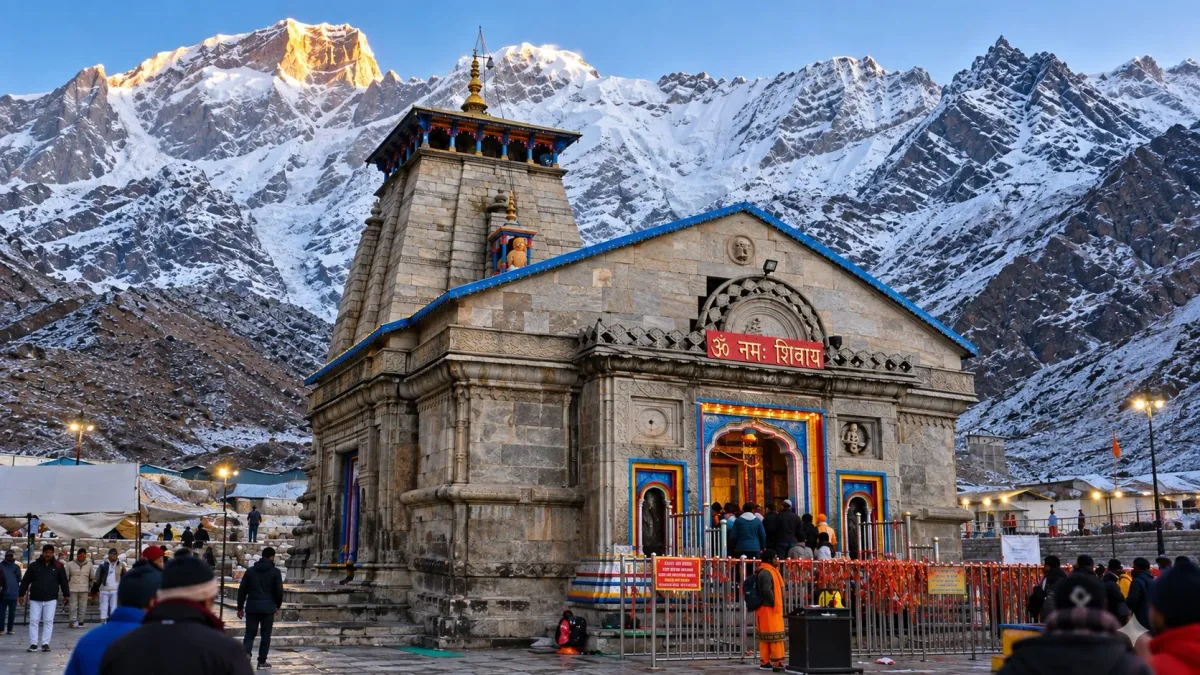
Kedarnath Temple is Lord Shiva's sacred abode, set in the lap of the Himalayas in Uttarakhand's Rudraprayag district, counted among both the twelve Jyotirlingas and the Panch Kedar.
Significance of Kedarnath Temple
It is believed that after the Mahabharata war, the Pandavas, seeking release from the sin of killing their own kin and teacher, came to the Himalayas for Lord Shiva's darshan. Displeased with them, Shiva took the form of a bull and burrowed into the earth, but Bhima caught hold of his hump, which is worshipped at Kedarnath to this day as a triangular rock formation. Pleased at last, Shiva granted the Pandavas his vision and freed them of their sin.
Among the twelve Jyotirlingas, Kedarnath is Uttarakhand's only one and the highest-situated in the Himalayas. It is also the first and foremost of the Panch Kedar, a group of five Shiva temples, each dedicated to a different part of Shiva's bull-form, where he is worshipped in the form of his hump.
Visiting Kedarnath Temple
Kedarnath Temple stands at an altitude of about 3,583 metres, reached by a roughly 16-18 km trek, mule ride, or helicopter journey from Gaurikund. Owing to heavy snowfall, the temple's doors are closed through winter and reopened around Akshaya Tritiya, with darshan possible only until Kartik Purnima each year.
The temple's architecture follows the ancient North Indian style and is built from massive stone blocks, which withstood the devastating 2013 Kedarnath flash floods and kept the temple's core structure intact. Devotees usually visit Kedarnath before or alongside Badrinath, since both are part of Uttarakhand's own regional 'Chota Char Dham' circuit (Yamunotri-Gangotri-Kedarnath-Badrinath), note that this is a distinct, regional tradition from the original, all-India Char Dham (Badrinath, Dwarka, Puri, Rameswaram) established by Adi Shankaracharya.
Rituals & Prasad
The temple holds a Maha Abhishek every morning, bathing the Shivalinga with milk, curd, ghee, honey, and water from the Mandakini river, followed by shringar (adornment) and bhog offerings. Morning and evening aarti are held daily. Devotees typically receive rice (bhog) as prasad. All pujas can be booked online through the official Badrinath-Kedarnath Temple Committee (BKTC) portal.
Health & Accessibility
Kedarnath Temple sits at an altitude of about 3,583 metres, where altitude sickness is a real risk. All pilgrims undergo mandatory SpO2 (blood oxygen) and blood pressure screening at the Sonprayag checkpoint, and those below the required threshold aren't permitted to continue. Pilgrims above 55, or with heart conditions, asthma, diabetes, or high blood pressure, are advised to get a medical check-up before travelling.
For pilgrims unable to cover the 16-18 km trek on foot, pony, palanquin (doli), and helicopter services are all available, young children and elderly pilgrims with health concerns are generally advised to consider the helicopter option.
How to Reach Kedarnath Temple
About Kedarnath Temple
Kedarnath Temple is a sacred abode of Lord Shiva, counted among both the twelve Jyotirlingas and the Panch Kedar. This page covers the temple's mythological significance, its story tied to the Pandavas, and general information about visiting and darshan.
The information on this page is presented with easy-to-read sizing and print support.
Frequently Asked Questions
Where is Kedarnath Temple located?
It is located in Uttarakhand's Rudraprayag district, in the Himalayan range, at an altitude of about 3,583 metres.
When do Kedarnath Temple's doors open and close?
The doors generally open around Akshaya Tritiya (April-May) and close for winter around Kartik Purnima (October-November). The exact dates are fixed each year according to the panchang.
How is Kedarnath counted among both the Jyotirlinga and the Panch Kedar?
As the legend describes, Shiva is worshipped here in the form of his bull-form's hump, which is why this is the first temple of the Panch Kedar, while it is also counted as one of the twelve Jyotirlingas, both lists refer to this same temple.
How do you reach Kedarnath?
One can reach Gaurikund by road, and from there cover the remaining 16-18 km to Kedarnath on foot, by mule, or by helicopter.
How are Kedarnath and Badrinath related to the Char Dham Yatra?
Both are part of Uttarakhand's own regional 'Chota Char Dham' circuit (Yamunotri-Gangotri-Kedarnath-Badrinath), a distinct regional tradition from the original, all-India Char Dham (Badrinath, Dwarka, Puri, Rameswaram) established by Adi Shankaracharya.
संबंधित पाठ
Related Readingsव्रत एवं उपकरण
Vrat & ToolsRelated Searches
Best Time to Visit
May-June and September-October are best. The temple's doors are open only from around Akshaya Tritiya (April-May) to Kartik Purnima (October-November), and travel during the monsoon (July-August) is best avoided owing to landslide risk.
Yatra Registration
Online registration and a QR e-pass are mandatory for the Kedarnath Yatra, without it, pilgrims aren't permitted past Sonprayag or Gaurikund, whether on foot, by pony/palanquin, or by helicopter. Registration is free of cost.
Go to Registration Portal