 Astha SangrahASTHA SANGRAHhttps://asthasangrah.com
Shri Pradosh Vrat Katha
The Pradosh vow is observed on both Trayodashis of every month, and is known by whichever weekday it falls on, Ravi, Soma, Mangal, Budh, Guru, Shukra, or Shani Pradosh, with tradition telling a different story for each. This page gives a general introduction to the vow and its method of worship, with links below to the story page for each of the seven weekdays.
Chapter 1 · What Is the Pradosh Vrat
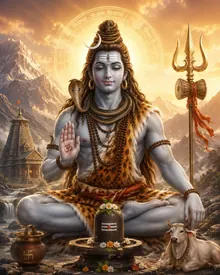
The Pradosh vow is observed on both Trayodashis of every lunar month, the one in the Shukla Paksha and the one in the Krishna Paksha. The short interval after evening and before night falls is called the Pradosh hour, and it is traditionally at this hour that Lord Shiva is worshipped, which is how this vow came to be named the Pradosh Vrat. It is believed that Lord Shiva performs his joyful Tandava dance atop Mount Kailash at this hour, and that a devotee who worships him with faith at this time has their wishes fulfilled. Whichever weekday the Trayodashi falls on, the Pradosh vow is known by that weekday's name, and tradition tells a different story for each one, hearing it being considered necessary to complete that day's vow.
Chapter 2 · Pradosh Stories by Weekday
The Trayodashi that falls on a Sunday is called Ravi Pradosh. Its story is of a poor Brahmin's only son, who escapes robbers only to be mistaken for a thief and imprisoned by a king, and is finally proven innocent and freed through his mother's devotion to the Pradosh vow.
Read the Ravi Pradosh Vrat Katha →The Trayodashi that falls on a Tuesday is called Bhaum or Mangal Pradosh. Its story tells of Hanuman, disguised as a sadhu, putting an old devotee's faith through a difficult test, before revealing his true form and blessing her.
Read the Bhaum Pradosh Vrat Katha →The Trayodashi that falls on a Wednesday is called Budh Pradosh. Its story tells of a man who stubbornly brings his wife home on a Wednesday and then encounters another man identical to himself on the road, a trouble resolved only through prayer to Shiva.
Read the Budh Pradosh Vrat Katha →The Trayodashi that falls on a Thursday is called Guru or Brihaspati Pradosh. Its story tells of the battle between Indra and the demon Vritrasura, which Indra wins only after observing this very vow on his guru Brihaspati's advice.
Read the Guru Pradosh Vrat Katha →The Trayodashi that falls on a Friday is called Shukra Pradosh. Its story tells of a merchant's son who stubbornly brings his wife home during the setting of Venus, after which misfortune after misfortune follows, until the Shukra dosha is finally removed.
Read the Shukra Pradosh Vrat Katha →The Trayodashi that falls on a Saturday is called Shani Pradosh, and its story is the most widely told of all, a poor Brahmin widow's two sons' devotion to Shiva leads a dispossessed prince back to his own kingdom.
Read the Shani Pradosh Vrat Katha →How to Read Shri Pradosh Vrat Katha
The time after evening and before night falls is called Pradosh, and one observing the vow should worship Lord Shankar during that very hour. On Trayodashi, do not eat through the day; in the evening, when three ghadis remain before sunset, finish bathing, wear white clothes, and after the evening prayers, begin Shiva's worship. For the udyapan, set up a canopy with colourful cloth, install an image of Shiva-Parvati, perform a havan with kheer, offer 108 oblations with the mantra Om Uma Sahita Shivaya Namah, and finally give a gift to a Brahmin and eat together with one's family.
About Shri Pradosh Vrat Katha
This page is the introduction page for the Pradosh vow, describing the Trayodashi tithi, the Pradosh hour, and the general method of worshipping Shiva. The Pradosh vow has no single fixed name or story, it is always known by whichever weekday the Trayodashi falls on, and tradition tells a different story for each weekday.
The seven weekday-wise Pradosh stories, Ravi, Soma, Mangal (Bhaum), Budh, Guru, Shukra, and Shani Pradosh, are listed below under 'Pradosh Vrat by Weekday'. The full text of each story is available on its own page in plain Hindi, with adjustable text size and print support.
The purpose of this page is to give a general introduction to the Pradosh vow, not to present any single story. Since Trayodashi falls twice every month and can land on any of the seven weekdays, tradition tells a different Pradosh story for each one, Ravi, Soma, Mangal, Budh, Guru, Shukra, and Shani Pradosh all have distinct stories, each with its own separate source tradition. The details and source for each story are given on its own page. The story for Som Pradosh is found, in some published sources, to closely resemble (and in places be identical to) the Shani Pradosh story, so a separate page for it has not been made here, see the Shani Pradosh page instead.
Frequently asked questions
When is the Pradosh Vrat observed?
This vow is observed on both Trayodashi tithis of every month, during the Pradosh hour after evening and before night falls.
What does 'Pradosh' mean?
The time after evening and before night falls is called Pradosh, and it is during this very hour that Lord Shankar is worshipped.
Is there just one story for the Pradosh Vrat?
No, both the vow's name and its story change according to which weekday the Trayodashi falls on, Ravi, Soma, Mangal, Budh, Guru, Shukra, and Shani Pradosh all have their own distinct stories in tradition. Each story can be read on its own page from the list below.
Which of these stories is the most widely told?
The Shani Pradosh story, of a poor Brahmin widow's two sons and a dispossessed prince, is considered the most widely told, and is what most people are looking for when they search for 'Pradosh Vrat Katha'.
Is the udyapan necessary for the Pradosh Vrat?
As described in the puja vidhi, once one's wish is fulfilled, the udyapan should be performed properly, installing an image of Shiva-Parvati and including a havan and a meal offered to a Brahmin.