 Astha SangrahASTHA SANGRAHhttps://asthasangrah.com
Jivitputrika (Jitiya) Vrat Katha
Jivitputrika Vrat Katha is the story of King Jimutavahan's sacrifice, and of Chilhi and her friend the jackal who also observed this vow, recited on Ashwin Krishna Ashtami, presented here in full.
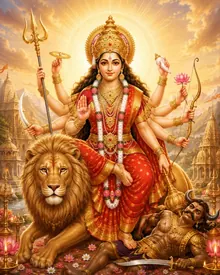
Chapter 1 · The Story Begins, Suta, Gautam, and Draupadi
Once, all the sages residing in Naimisharanya, wishing for the world's welfare, asked Suta ji how children could live long lives in this terrible, fearsome Kali Yuga. Suta ji said:
At the end of Dwapara Yuga, when Kali Yuga began, grieving women started wondering how to secure their sons' long lives. Where the great sage Gautam sat peacefully in solitude, those women went and stood before him with humility, saying, O lord, please tell us with certainty, by which vow or penance will our sons live long in this fearsome age?
Hearing the women's words, Gautam ji said: O women, listen to what I have heard before. When the Mahabharata war ended, Yudhishthira ji was grieved. When Ashwatthama slew his sons, Draupadi, afflicted with grief for her sons, went with her companions to that most fortunate and excellent Brahmin, Dhaumya ji.
Draupadi said: O best of the twice-born, please tell me the truth of this. Dhaumya ji said: In the Satya Yuga, there lived a truthful, honest, even-sighted, and compassionate king named Jimutavahan. Once, he went to his father-in-law's home and stayed there with his wife.
In that village, at midnight, a grieving woman, distraught with the sorrow of losing her son and without hope of seeing him again, began to wail in a pitiful voice, 'Alas, alas! Before this old woman's very eyes, my young son is about to perish!' Hearing her lament, the compassionate king's heart melted. The king went to her and asked the cause of this death. She said: O king, Garuda ji devours one son every day. Hearing the old woman's words, the compassionate king said: O mother, wait, I shall make every effort to protect your son.
Chapter 2 · King Jimutavahan's Sacrifice
So saying, the king cast aside his fear and went to that place of feeding, where Garuda ji came and began to eat the flesh of the king's own body. When the mighty and radiant Garuda had eaten the left side, the king turned over and offered his right side as well.
Seeing this, Garuda ji asked: who are you among the divine beings? O brave one, you are no mere mortal; tell me your birth and lineage. Then the king, though tormented with pain, himself said: O Garuda, eat as you wish; what use is there in such idle questions?
Hearing this, Garuda himself stopped eating, and insistently asked the king his birth and lineage. The king said: my mother is Queen Shaivya, and my father is King Shalivahan. Born in the Surya Vansha (solar dynasty), I am King Jimutavahan.
Chapter 3 · Garuda's Boon and the Origin of the Vrat
Seeing the king's compassion, Garuda quickly said: O great king, ask for whatever boon is in your heart. The king said: O Garuda, if you wish to grant me a boon, then I ask this: let all those you have previously made your food come back to life, and now eat no living being at all, this is my prayer, and grant that whatever children are born henceforth may live long lives.
Granting this boon with joy, the king of birds, Garuda, himself went to fetch nectar at the king's wish, and, bringing it, showered it abundantly all around upon the dead bodies and bones on earth. By this, all those who had earlier been eaten came back to life, by Garuda's grace and the king's mercy. The king's own body became doubly resplendent.
Seeing the king's compassion, Garuda ji said again, I myself grant a second boon, for the welfare of the world, the Ashtami tithi of the Krishna Paksha of Ashwin, free of Saptami, is exceedingly auspicious. On this tithi, O child, you have brought the people back to life, so this day shall be filled with sacred wisdom. The image of Shri Durga ji has many forms, worshipped in all three worlds, O child, since the nectar was brought today, this Ashtami has come to be named 'Jivaputrika', and this is none other than the goddess Durga herself.
On this Ashtami tithi, whichever women worship Jivaputrika, forming your image out of kusha grass and worshipping with devotion and faith, their good fortune and lineage shall grow continuously, O great king, of this there is no doubt. The fast should be kept on whichever Ashtami is free of Saptami, the Ashtami on which the sun rises being the true one, and the fast should be broken (Parana) on the Navami day. An Ashtami mixed with Saptami should never be observed, or else no merit is attained and good fortune is certainly destroyed.
Thus, having granted the king this boon, Garuda ji departed for Vaikuntha in Vishnupur, and the king too returned to his own city with his wife. O goddess, I have told you this most rare vow, by whose power sons live long lives. Therefore, O goddess, observe this vow according to the method described, worshipping in it Parvati ji's Shailaputri form, and you shall then attain its fruit. Hearing the sage's words, Draupadi, greatly pleased, called together all the women of the village and began observing this excellent vow.
Chapter 4 · The Story of Chilhi and the Jackal-Friend
Gautam ji said: hearing of this vow's power, a jackal named Chilhi told this to her beautiful friend, another jackal, and she too accepted this vow. Dwelling in the shade of a Peepal branch, Chilhi, devoted to the vow, began observing it, and in the hollow of that same Peepal, her friend the jackal also began her observance.
Having heard this katha somewhere from an excellent Brahmin, Chilhi recited it to her friend the jackal, seated in the hollow. Hearing half the story, the jackal, her body distraught with hunger, came out of the hollow and quickly made her way to a cremation ground full of corpses. Going there, she ate meat according to her wish, while Chilhi completed her waterless vow, and thus morning came.
She then went to a cowshed and drank sweet, fragrant water, and there, with a composed mind, broke her fast on the Navami day. After a few days, both of them gave up their bodies. After this, in Koshalpur, in the house of a wealthy merchant, by coincidence both were born in the very same household, the elder sister was the jackal reborn, and the younger sister was Chilhi reborn.
Chapter 5 · The Story of the Fruit Received
Both sisters were endowed with every auspicious mark and retained the memory of their past birth. The elder sister was married to the king of Kashi, and the younger to the king of Kashi's minister, both weddings performed with full rites before the sacred household fire. As a result of their past life, whatever sons the doe-eyed queen bore all departed to Yamraj's abode.
The minister's wife, retaining memory of her past birth, bore eight sons, like the mother of the eight Vasus. Seeing them, the queen, out of jealousy, said before the king, O lord, fulfill my wish: the path by which my sons have gone to Yamraj's abode, if you wish for our welfare, send my sister's sons by that same path too. Hearing this, the king did just as she asked.
Then the goddess Jivaputrika brought those dead children back to life. Once, in the forest, their heads were cut off and sent to that house in bamboo vessels, and those heads turned into various kinds of jewels at that very instant. Seeing this, the queen was utterly astonished, and came to her sister and asked: what vow have you observed, by which your sons, though killed again and again, keep coming back to life?
The minister's wife said: in our past birth, I was Chilhi, and you were the jackal. While observing the vow, you did not carry it through properly, and it is by this very fault, O sister, that your sons do not survive. My vow was never broken, which is why my sons live on. O dear sister, now you and the king should both observe this vow, by its power, your sons too shall live. O fortunate one, I speak the truth.
Hearing this, the queen too observed this vow. From that day, the king came to have living sons, and the queen's sons too grew exceedingly beautiful. They became kings upon this earth and lived for a long time. Suta ji said to the sages, this is the beautiful vow, ever increasing good fortune, that I have told you. Whichever women wish for their sons' long life should observe this vow.
How to Read Jivitputrika (Jitiya) Vrat Katha
On Ashwin Krishna Ashtami, free of Saptami, observe a day-long waterless fast, and worship Goddess Jivitputrika (Parvati's Shailaputri form), forming her image from kusha grass, with faith and devotion. Break the fast on the Navami day. Never observe an Ashtami mixed with Saptami, or the vow bears no fruit. The full vidhi is given in this page's third chapter.
About Jivitputrika (Jitiya) Vrat Katha
The Jivitputrika Vrat Katha tells the story of King Jimutavahan's sacrifice, and of the jackal Chilhi and her friend who also observed this vow, told across five chapters. The first chapter has the chain of narration from Suta to Gautam to Draupadi, the second and third chapters cover King Jimutavahan's sacrifice and Garuda's boon, the fourth chapter tells the story of Chilhi and the jackal, and the fifth chapter gives the story of the fruit they received.
This vow is observed on Ashwin Krishna Ashtami, during Pitru Paksha, by mothers wishing for their children's long life. This page presents the full text of all five chapters in plain Hindi, with adjustable text size and print support.
The Jivitputrika (Jitiya) Vrat Katha has no single named author. It is woven as a nested narrative, Suta ji narrating to the sages of Naimisharanya, sage Gautam narrating to grieving women, and Dhaumya ji narrating to Draupadi, and is traditionally linked to the Bhavishya Purana and Bhavishyottara Purana. The text presented here is a faithful transcription of the Hindi meaning (bhavarth) given alongside the Sanskrit verses in a published Sanskrit-Hindi vrat-katha booklet, with only clear printing errors corrected, and one or two very brief gaps bridged smoothly for continuity of meaning, no change has been made to the story itself. The original Sanskrit verses given in the source booklet are not included on this page; only their Hindi meaning is presented here. Other printed editions may use different wording.
Frequently asked questions
How many chapters does the Jivitputrika Vrat Katha have?
It has five chapters in total, traditionally read or heard together as one complete text.
When is Jitiya Vrat observed?
This vow is observed every year on Ashwin Krishna Ashtami, which should be free of Saptami, and the fast is broken on the Navami day.
What did King Jimutavahan sacrifice?
To save a grieving old woman's son from Garuda ji, King Jimutavahan himself offered his own body as food before Garuda, and pleased by his compassion, Garuda granted him life along with all the beings previously eaten.
What does the story of Chilhi and the jackal teach?
Chilhi observed the vow with complete integrity, while her friend the jackal broke it midway by eating. Because of this, in the next birth, Chilhi's (the minister's wife's) sons always survived, while the jackal's (the queen's) sons did not, until she too observed the vow properly.